Tuesday, 2 September 2025

On Destiny, Coincidences, and How I Came to Live In Lyon

A big hello to all my many millions of fans all over the world my friends, and it's long time no see! I'm restarting the blog, but whereas it was mostly about French politics before, I've decided to change the content by relating lots of stories from my little life as well as some bits and bobs of news from France and elsewhere that catch my eye. And what has caught my eye today? 

Leaves, or rather a depressing lack of them. 

In normal times, the leaves begin to fall in late September here in Lyon, and it takes up to two months before they are all gone, but as the photo above, which I took yesterday afternoon from my window, shows, autumn for leaves is almost over already, and it's not even September yet!
And it's been the same for the last few years now mainly due to episodes of severe drought and dangerous heatwave conditions.

My point being that if this is how things are now, and taking into account the fact that our governments and other powers that be aren't doing anything like enough to slow down global warming to an appreciable degree...

...all I can say is god help today's young people and children, because unless radical changes are introduced very soon their futures are going to be very bleak indeed. 🙍🙍🙍
-------------------------------------------

Big Belly Blues

A very fat Me in February of this year.


I've been lucky enough to be slim all my life. 
Well I was anyway, until last year, when following almost a dozen hospital stays I ate like a madman to put back on all the weight I had lost, but I overdid it and found myself with a bit of a biggish belly, which is very bad for one's health, no?
ME? A BIG BELLY? NEVER!!!
But it was true alas, so I started half-starving myself in order to lose those life-threatening excess kilos I had gained, and, lo and behold, I am pleased to announce that I am now almost as healthily slim as I was before. Happy days indeed!

Yeah, but my happy disposition was cruelly destroyed a few minutes ago
 when I read the following headline in today's Figaro (translated by yours truly) - 'A larger stomach is like added life-insurance': after 65 years of age a bit of extra weight is better for you than being slim.

(Right, I'm off to eat four massive bacon sandwiches followed by a large plate of charcuterie. Bye bye all!)
------------------------------------------

Oh and before I go, here's the story about what happened when I came to Lyon for the first time. Those were very strange times indeed...

It was the early 1990s and I had been working very hard for several hot summers as a waiter in the Mediterranean resort of Canet Plage, and each winter would see me working equally hard in various French ski resorts as well as in Andorra. 
In other words, I may only have been in my early Forties, but I was totally burned out both mentally and physically because few people last more than a few years in that job and in those very poor conditions. It was time for me to look at other options.

I had been thinking of eventually becoming an English teacher and French/English translator, so I decided to contact someone I knew in Paris to ask if he could put me up for a few weeks while I found a job and my own place to live. A translator in Paris. How romantic and exciting it all sounded!!

And that's how, just a couple of weeks later, I found myself on the northern outskirts of Perpignan just before lunchtime, my thumb sticking out and praying for someone to pick me up, direction Paris. It was a bit cold at that time of year, but I kept my spirits up by imagining all those lovely Parisian girls I'd soon be wining and dining and seducing and all the rest of it. The world was my huitre!

The motorway was quite busy so I made good progress, and in what seemed no time at all the car I was in plunged into the darkness of the Forvière Tunnel before flying out of the other end and into the light one minute later. I didn't see much of Lyon but hey ho, onwards we went and less than an hour later the car dropped me off near Villefranch-sur-Saône.

Brrrr, it was now early evening and I'd been waiting for what seemed like forever for someone to pick me up again when a youngish guy parked up just at the entrance to the motorway, got out of his car, and began eating a sandwich whilst leaning against the bonnet. The road sign at this entrance offered a stark choice - Paris or Lyon - so hoping that the 50-50 chance would go my way I asked him if he was going towards Paris.

'Sorry' he said, 'I'm going down to Lyon.'
'Oh well, never mind' I said, 'But thanks anyway'.
However, as I began to walk away a cold gust of wind reminded me of how cold it was getting, and as it was almost 7pm I knew it would get a lot colder soon. Hmmm, bad news that, I thought, because another problem was that with much less traffic about I might be forced to sleep in the only shelter I could see, which was in a dry ditch near a hedge.

So I stopped in the middle of the road, turned around, and said to the guy, who was just about to leave, 'Errr, I've changed my mind so could you take me back down to Lyon?
'Sure' he replied, and so it was that I found myself speeding back to Lyon, a city I'd never visited, a place I knew nothing about...

I mean just think. If someone had picked me up earlier to take me to Paris, if that guy hadn't stopped to eat a sandwich, if the weather had been warmer, if, if, if, if...
...I would never have spent almost 30 years in this beautiful city.

Funny how it's often the little details that change our lives completely.

Fripouille


Wednesday, 23 April 2014

Hollande: time to dissolve parliament and call national elections?

Rumours that François Hollande may dissolve parliament and call elections began to circulate a week ago when he said in public that he would not stand for re-election if he and his government did not succeed in reducing unemployment. This was a significant statement because it is by no means certain that he will be able to lower unemployment given the economic outlook. Also, he is said by some advisors to be adopting a policy of secretive 'bunkerisation' at the Elysée and is becoming weary at the constant criticism he is receiving in the press. He was also shocked by the extent of voter dissatisfaction that saw the socialists trounced in recent national local elections.

This spectacular defeat forced Hollande to be seen to react, and that's why he let PM Jean-Marc Ayrault go and installed Manuel Valls in Matignon to replace him. But the change has not been anything like effective so far.On the contrary, things have gone from bad to worse.

The day Valls was named a group of 100 socialist dissidents let him and Hollande know that they might not give the new government the parliamentary vote of confidence that would officially allow it to take office and begin work. They backed down in the end but the tone was set - the dissidents were here to stay.

What are the dissidents angry about? They are angry at Hollande's Social-Democratic conversion, which they say goes against everything that socialism represents. They feel that nothing is being done to make life easier for ordinary citizens and that the poor are being milked dry to help the rich. In other words, their objections are of an ideological nature.

Meanwhile, the reality on the ground remains dire. France failed recently to persuade the EU to give it more time to get its finances in order. This latest demand was the third in so many years and the EU's curt refusal showed that it has finally decided to force France to engage the structural and economic reforms that it has been trying to put off or has not been able to implement.

Further bad news followed in the form of Hollande being obliged to fire a prominent Elysée advisor because he was suspected of a conflict of interest in his business dealings. The opposition poured oil on the flames and Hollande's popularity ratings began to fall even further.

The extent of his unpopularity became painfully clear to him today when he was roundly bood by socialists who had come to hear him speak at a ceremony to mark the 100th anniversary of the death of legendary founding socialist Jean Jaurés, a man of deep socialist convictions who is still revered within the party today. Accusing him of betraying socialism and Jaurés' legacy, the protestors also demanded to know why he had not held his election promises to be 'the enemy of finance'.

Then, just this afternoon, the dissidents decided this afternoon to reject planned spending cuts by the government and either vote against them in parliament or abstain. These cuts are designed to contribute to the €50 billion the government is trying to raise to honour François Hollande's New Year promise to cut the business sector some tax slack to enable companies to keep prices down and hire more staff. That plan is the 'Pact of Responsibility', and Hollande said at the time that it was "urgently needed". Four months on however, almost no progress has been made on it and this is largely due to the dissidents' stalling tactics.

In other words, Hollande is facing a serious backbench revolt that is holding up reforms and legislation and he and his government have been unable to move forward on changes at a time when they are of the utmost importance.

How long can this situation be allowed to continue? A massively unpopular president and government, open revolt in his party, a paralysed parliament, the country is to all intents and purposes at a standstill.

François Hollande is very much aware of his situation and may well be thinking that if he cannot be permitted to implement his own policies that it's time to begin to consider dissolving parliament and asking the people to decide in legislative elections. If this were to happen the result would almost certainly be a victory for the opposition UMP and a 'government of cohabitation' between Hollande and his enemies, who may, ironically, be more open to his more liberal plans. As to the dissidents, many of them would be out of a job.

What if the dissidents threw out his cuts when they are voted upon? What if he threatened dissolution? Would the threat force the dissidents to climb down? We don't know yet, but we do know that something must be done, and soon, to ensure that France has a functioning government at the very moment it most desperately needs one.

Sunday, 6 April 2014

Suicidal French socialists should take Winston Churchill's advice

Courtesy of AFP/Archives
It has been a week to the day since the Socialists and the president were handed the biggest defeat in local elections ever recorded during the 5th Republic. The nature of the cabinet reshuffl that has followed seems to indicate that Hollande has recognised that his government needs to speak with one voice if it is to be credible, and Valls is determined to put a stop to the squabbles and contradictory declarations that characterised Ayrault's reign.

Yet, incredibly, Valls and Hollande are today facing the biggest revolt by backbench Socialists since Hollande became elected, and the cacophony of dissent is deafening. Added to this is the fact that the ecologists have decided not to participate in the new government, thus weakening it from day one.

It began on the very evening that the election results were announced, but it went relatively unnoticed at first. Consisting of a document called The Conditions for Confidence - For a Contract of the Majority, it demands that the government and Hollande change their policies and insists that Hollande must implement his election promises. It goes on to outline a series of measures its authors say should be taken immediately in order to change course.

The reason for the dissent is that Hollande and Valls have made it clear that the government's policy package is to remain more or less intact. This means we shall see more cuts and more money - €50bn - dedicated to helping businesses to create new jobs. It's a brave - some would say foolhardy - move designed to get France's economy back on track and reduce deficits.

Who is behind it? The main instigator seems to be no less that party First Secretary Martine Aubry, a woman who has never hidden her disdain for Manuel Valls and who is still licking her wounds after being defeated in her efforts to become Prime minister after Hollande's victory. This led her to refuse a cabinet post and keep her distance from Matignon. So far the document has been signed on to by 86 députés and senior left-wing figures, including the First Vice-president of the National Assembly and the presidents of several parliamentary commissions. At least a couple of dozen more are expected to sign it before Valls presents his new policies to parliament for a vote of confidence next Tuesday.

It begins by declaring that "dialogue with the new government begins now" and goes on to list its demands. Here are those that are directly related to the economy;
[We must] obtain a reorientation of Europe that puts an end to the policies of austerity that have pushed Europe into recession [by establishing] sustainable budgetary trajectories....
[We must] concentrate public means on the real creation of jobs and intensify industrial renewal. For that, we must substitute a national investment pact, negotiated with companies, for the more costly conditions that are without conditions [for business] that are being considered right now in the Pact of Responsibility.
[We demand] measures in favour of low salary earners, fiscal reform and a progressive CSG [a tax that helps finance the Social Security system] and an effort in favour of those on modest retirement benefits.
[We need to] Reaffirm and amplify the choices and engagements undertaken in 2012: beef up efforts to regulate financial and banking activities.
To put that into plain English;

- France should confront the EU (and Germany) and demand that the very budgetary constraints that France helped to create to save the euro should be scrapped in favour of a more laxist approach that would increase national debt, thus risking the ire of the markets, the IMF and the moneylenders.
- France should create tax-funded jobs, thus increasing the tax burden on households in order to create artificial jobs that don't create wealth. Also, business should be forced to contribute to the effort, thus lessening the possibility of them creating real jobs and frightening investors away.
- More public money should be found to help the less well off.
- Hollande should put his "I am the enemy of finance" promise into effect, with stricter demands being placed upon the markets and banks, despite the fact that doing so unilaterally would ensure that France became the international paria of the world of business, lending and investment.

In other words, this document demands that France revert to the very policies that got it into this mess in the first place. Hollande tried them for almost a year until it became clear that doing so risked driving the economy straight over a cliff and pushing the country into a deep recession.

French socialists still seem to be stuck in a timewarp in which believe that business, bosses and the rich are their enemies and that France can tax its way out of debt using their money. Adopting these policies would be akin to committing economic suicide and Hollande and Valls should reject these demands out of hands.

I am reminded of these wise words;

"I contend that for a nation to try to tax itself into prosperity is like a man standing in a bucket trying to lift himself up by the handle."- Winston Churchill

Thursday, 3 April 2014

Hollande and Valls create France's first ever de facto Social-Democrat government

Manuel Valls, French Social Democrat
The day after the Socialist's and François Hollande's crushing defeat in the local elections saw not only Hollande but a slew of other government heavyweights insisting that yes yes, "we have heard the message of the French people."

Well, they may have 'heard the message', but Hollande has clearly decided that it's not because he heard it that he should listen to it. That's why he has chosen to continue to implement his highly unpopular policies, which consist of a mix of measures designed to help businesses, tax households and kickstart a decrease in France's record unemployment rate via structural reforms. Going further, he has eliminated a couple of dissenting voices in the ranks of the cabinet and installed Manuel Valls in Matignon. But why Valls?

Hollande's presidential election campaign was highly ambiguous, alternating as it did between promising to reform France's antiquated job market and saying he was the "enemy of finance", or saying he would reduce public spending yet promising job creation based on it being financed by the state. However, after a few initial months trying to borrow his way out of debt whilst continuing to spend he was sharply reprimanded by the EU, investors and the markets. It was at this point that he took the plunge and opted for what is called in France 'the social compromise'. This is the name given to the post war acceptance by the left that the head-to-head ideological class fight against capital was doomed to defeat and that it had become necessary to trade off some of its more hardline values and compromise more with a changing world. In other words, Hollande began to 'do a Tony Blair' and adopt more liberal policies.

Mid-January saw Hollande announcing his 'pact of responsibility', a plan to inject money into the business world and make it easier for companies to hire and fire, and to drive his point home he announced that he was a Social-Democrat in the sense that he was going to "take action to reach a compromise with big business." The announcement was roundly condemned by the left wing of his party and all the other left-wing parties, the press didn't quite know what to make of it all, and the public became even more disillusioned with him than it had been up till then. But the government was rattled by the extent of the revolt, which reached its peak when the local elections came around, hence Hollande's drubbing. Hollande now needed a whipping boy, a sacrifice to feed to the lions of public opinion.

Enter Manuel Valls. He was a natural choice for two reasons. Firstly, he is a stickler for discipline, and party discipline in particular. During Ayrault's time dissention was rife within the cabinet, which sent out conflicting statements on just about everything to the point where the government looked more like a rudderless ship with a rowdy and rebellious crew aboard than anything else. Valls, however, is expected to restore order and impose a more coordinated and disciplined system of communicating with the press and public, whereby unofficial press statements and interviews shall become more sparse and dissention within the ranks sanctioned. Think 'professional', instead of 'amateur', politics.

More importantly however, he has been chosen because he shares Hollande's political and ideological approach. Intensely disliked by left-wingers, he, like Hollande, is a self-proclaimed Social-Democrat whose ideas have often been compared to those of Tony Blair. He will be best remembered at the Interior ministry for continuing to implement policies from the days of Sarkozy that resulted in a no-nonsense policy of deporting Roma and other illegal immigrants as well as failed asylum-seekers.

He is also known to be a critic of the dogmatic left-wing approach to fixing problems that consists of clamouring for more spending as well as tighter controls over the business sector. A pragmatist, Valls considers that the only way out of the economic hole that France is in is to reform its employment legislation, help businesses to create jobs and accept that belts are going to have to be tightened. In other words, he is a 'Hollandist'.

The Hollande-Valls tandem shall probably last until the next presidential elections, three years from now, and between now and then they are to steer the country through a round of spending cuts, debt-paying and structural reform of the economy in general that is designed to get the country back on its feet.

One may agree or not with these policies, but one thing's for sure, Hollande and Valls are no longer representative of a socialist agenda. They are implementing an unabashedly social-democratic agenda. If they fail, the right will sweep back into power like a tsunami, and the Socialist Party will be in opposition yet again after just one term in office.

But if they succeed, they will, ironically, have effectively killed off French Socialism and replaced it with fully-fledged social democracy.

Sunday, 30 March 2014

French local elections: Hollande is not the only big loser

A French polling card, one of millions that went unused today
The result of today's French local elections was already a foregone conclusion as early as midday, when the press announced that just 19.83% of the electorate had turned out thus far for the second round.

Meanwhile, opposition UMP and Front National voters had their tails up. They knew they had every chance on capitalising on their first round gains, they were smelling blood, and they have finally got it in the form of a crushing defeat for the socialists and François Hollande.

This was the first national ballot since Hollande's election in May 2012, and as such this shattering defeat effectively represents payback time for a President and government who have been in trouble since the day they were elected. Hollande quickly came under pressure to deliver on his best-known election slogan, which was "I am the enemy of finance", and indeed he did begin his mandate with some harsh news for business and good news for the public. But as the country's financial situation degraded it was soon clear that this honeymoon could, and would, not last. 'Finance' finally picked up the gauntlet and France has been harshly sanctioned by international financial organisations, investors and the credit rating agencies ever since. Finally, disastrous unemployment levels, a catastrophic loss of foreign investment and widespread discontent with the way the country was being run led him to capitulate and tax households to the limit whilst giving tax breaks and other favours to business in a desperate ateempt to stimulate the jobs market.

In other words, disastrous as this result is for François Hollande and his government, it comes as no surprise. The first round resulted in very poor results for the socialists, whereas the UMP and FN did well. The abstention rate last week was 36.45%, and today saw it reach yet another new record high of 38%.

Unsurprisingly, the UMP, which despite the fact that it has had more of it share of problems lately what with a bitterly divided leadership and much internal squabbling, is tonight's big winner, having taken France's fourth-biggest city - Toulouse - as well as Saint-Etienne, Carcassonne, Laval, Quimper, Roubaix, Ajaccio, and many other towns.

The Front National captured a record number of towns, mainly in the south of the country. This tally included some fairly sizeable towns such as Béziers and Fréjus,

As for the Socialists, the pickings were meager, with the victory off Annie Hidalgo in Paris in a closely-fought battle being the only tiny sliver of good news on what has otherwise been an awful day for them, a day during which they lost well over 150 small-to-medium towns.

The future now looks extremely bleak for Hollande, who is widely expected to announce a cabinet reshuffle within the next few days, with PM Jean-Marc Ayrault being tipped to be replaced by either Laurent Fabius or Manuel Valls.

But the biggest loser here isn't Hollande, who is a career politician. After all, he's 'just' a president, and as such he can be replaced. What cannot be replaced however, at least not in the next few years, is the public's lost faith in its institutions and politicians. Today's record high abstention rate and sanction vote are merely the outward signs of a deep malaise in French society, a society that is becoming increasingly alienated from the democratic process and is profoundly cynical about its future prospects.

Successive French governments have tried to put off essential economic and social reforms for as long as possible. But these reforms are slowly but surely being imposed upon a recalcitrant France by globalised trade and a change in the world region pecking order that sees Europe in decline and Asia on the up. Hollande too has been resisting, and although he has done enough to persuade the moneylenders and the EU to stay off his back for a short while, much more needs to be done to catch up on the long years spent neglecting major structural problems in the economy.

France is a country that knows it must change, but is tetanised by fear at the very prospect of having to do so. The people are resigned and dispirited, and the reputation of the ruling classes is as bad as it has ever been in all the 27 years I have lived here.

What France badly needs right now is a president and parliament that can rise to the occasion and persuade the people to support them, however grudgingly, as they seek to get the country back on its feet.

In other words, France needs the one thing it doesn't have today - a pragmatic, charismatic and inspiring leader.

Sunday, 13 October 2013

France struggles to turn good ideas into profit: is it serious Doc?

Panama Canal construction - 1896
I have often heard French people declare that 'France is good at inventing things but bad at selling them', and I was reminded of that adage this morning by a combination of the content of two articles I read on the online French press.

The first article is on Le Figaro's '100 Years Ago' pages, and it recounts the interesting story of how the Panama Canal was imagined by the French, but built and exploited by the Americans.

Various countries and leaders had dreamed of building the canal since as early as the 1500s, but the French would be the first to try. Construction began in 1881 with major funding from both industry and the state, but the project soon proved to be more difficult than had initially been planned. It was eventually abandoned due to a combination of the ill-prepareness of geological and other studies, insufficiently trained engineers with little experience, unexpectedly high death rates among the workers due to malaria, poor equipment, financial mismanagement and political corruption. The fiasco had cost a fortune in lost investment and the loss of 22,000 lives due to illness and accidents.

The result was that the United States - who were also interested in building a canal - subsequently took over the project and finished it successfully thanks to better preparations and more expertise in the field of construction. France had conceded what would have been a major commercial and geopolitical advantage to America and its influence in South America has never fully recovered to this day.

I then went to Nouvelobs' site where I came across an article with the headline 'The French invent lots of things, and foreigners profit from them'. The article discusses the results of an international classification of countries according to the number of patents for newly-invented products they produce, and at first glance France does very well indeed seeing as it takes third place.

But the good news stops there. France may possess more patents than many other countries but the vast majority of the money it makes from them comes from selling them to foreign countries, who then go on to transform the prototypes and theoretical expertise they have just bought into sellable - and profitable - products. The country's technological prowess may be excellent, but France's industrial trade balance is in deficit.

French Minister for Higher Education and Research  recently summed up the situation with the following statement, made during a parliamentary speech;
"We must overcome the valley of death that separates research and innovation here in France. [...] French mentalities have been recalcitrant with respect to the links between the academic world, the world of research, and industry for far too long." She pleads for improvements in the way France looks at intellectual property "..to ensure that the excellence of our research, which is financed by public money, is not pillaged by others."
So there we have it. Two examples over a 100-year timespan that demonstrate France's ability to imagine and begin projects only to fail to capitalise on them due to a lack of vision and foresight. It would seem then that France is indeed "..good at inventing things but bad at selling them'.

But does that really matter? After all, France is still one of the top six economies in the world and the French, despite their penchant for complaining, enjoy one of the highest standards of living in the world.

I am reminded of another expression that the French often use to describe themselves. It says that the French are 'sweet dreamers'. Perhaps they are after all, and there's nothing wrong with that in my book.

Wednesday, 2 October 2013

A self-confessed pedophile is released on bail to await his trial. WHAT????!!!!

A 27-year-old military serviceman from Toulon in France who stands accused of repeatedly raping his niece over a period of three years has been released on bail.

The accused man has already admitted that he raped his niece on five occasions, the first of which was on July 1, 2009. The girl was 11 years old at that time. He is also known to have accessed pedopornographic images on the Internet over a period of several months.

The judge justified his decision to free the man to await trial instead of holding him in custody pending trial by saying that he had "furnished details about all the acts of which he is accused", that nothing "would lead one to consider that he lied during his spoken statements to the police", and that there is nothing to indicate "that there may be other victims". The judge concluded that the accused "presented solid guarantees that he would not skip bail." 

It goes without saying that this judgement has outraged many people. The police are furious that long months of hard work designed to put a suspected repeat-offender pedophile behind bars has failed even before his trial, the public - and parents of young children in particular - is dumbfounded, and it's the same story for all those associations and other organisations that fight child abuse and pedophilia. 

And I am outraged too. I am absolutely incensed that in this, a supposedly modern and progressist society which says it respects human - and that includes children's - rights, a judge can free a man who has admitted that he raped a child five times. I am sickened by the judge's mealy-mouthed, totally biased and subjective reasoning, and - although I would never dream of voting for them myself - I fully understand why the French political party which is making the most positive progress in polls at the moment is the.......


.......extreme-right National Front. 

Monday, 30 September 2013

Photos of the Vieux Port of Marseille

Readers of the French press will be aware that newspapers invariably jump on every gangland killing in Marseille and hold it up as an example of the city's chronic problem with drug dealing and violent crime in general. The articles are often given angst-ridden and dramatic headlines such as 'Marseille: the most dangerous city in France!!' Much debate then follows about the best way to resolve the issues. Equally predictable is the reaction to these stories of the people of Marseille. They hold that the press is exaggerating the phenomenon and giving the city a bad name. The truth though - as is ever the case with this kind of phenomenon - lies somewhere in between these two extremes.

Also true though is that despite the city's problems, the Vieux Port of Marseille is one of the most beautiful ports to be found not only in France, but in the whole of Europe.

So here are some photos of it that I took a couple of years back. The one here at the top of the page is the statue of the Virgin Mary with Jesus on top of the Notre Dame de la Garde, which overlooks the port and is the highest point in the city. I'm posting these photos as a reminder that Marseille is not just about violence, it's about a historical past, grace and elegance too.

----------------------------------

Humans have inhabited Marseille and its environs for almost 30,000 years, but the Vieux Port didn't begin to take on an international aspect until after the Greeks arrived there. There is testimony to that in the form of a commemorative plaque that is imbedded into the quayside. It reads;
It was here that Greek sailors who had come from the Greek city of Phocea in Asia Minor came ashore in about 600 BC. They founded Marseille, from where civilisation would illuminate the West.


The port is of the picture postcard variety and it's easy to understand why.


The Vieux Port is home to many sailing boats and smaller yachts.


Here is the perimeter of the commercial shipping port, which is of vital importance to the city's economy. I took this photo from a vantage point at which I could turn around and see the Vieux Port.


The port is U-shaped, with the top of the U representing the exit towards the Mediterranean, but if you're near the exit and want to visit the other side don't worry, you don't have to go back down and all around the U to get there because some bright entrepreneur once had the excellent - and very popular - idea of operating a ferry from one side to the other. Here's the crew, and as this photo shows the people of Marseille like to take things easy when they can. From whence this dual command post, at which one of these guys sails the ferry across, and the other sails it back. Very efficient.


The Vieux Port was heavily defended many years ago by forts on either side of the entrance. Here's one of them, St Jean.


Once beyond it you are in the Mediterranean, and from the moment this fort is no longer in view you are en route for the rest of the world.......


But beautiful though it is, there is much more to Marseille than its port, so I'll be back in a few days to post some photos of the downtown area and its attractions.

Have a good day, wherever you may be..

Saturday, 28 September 2013

French trade unions' opposition to sunday working: a throwback to the 19th century?

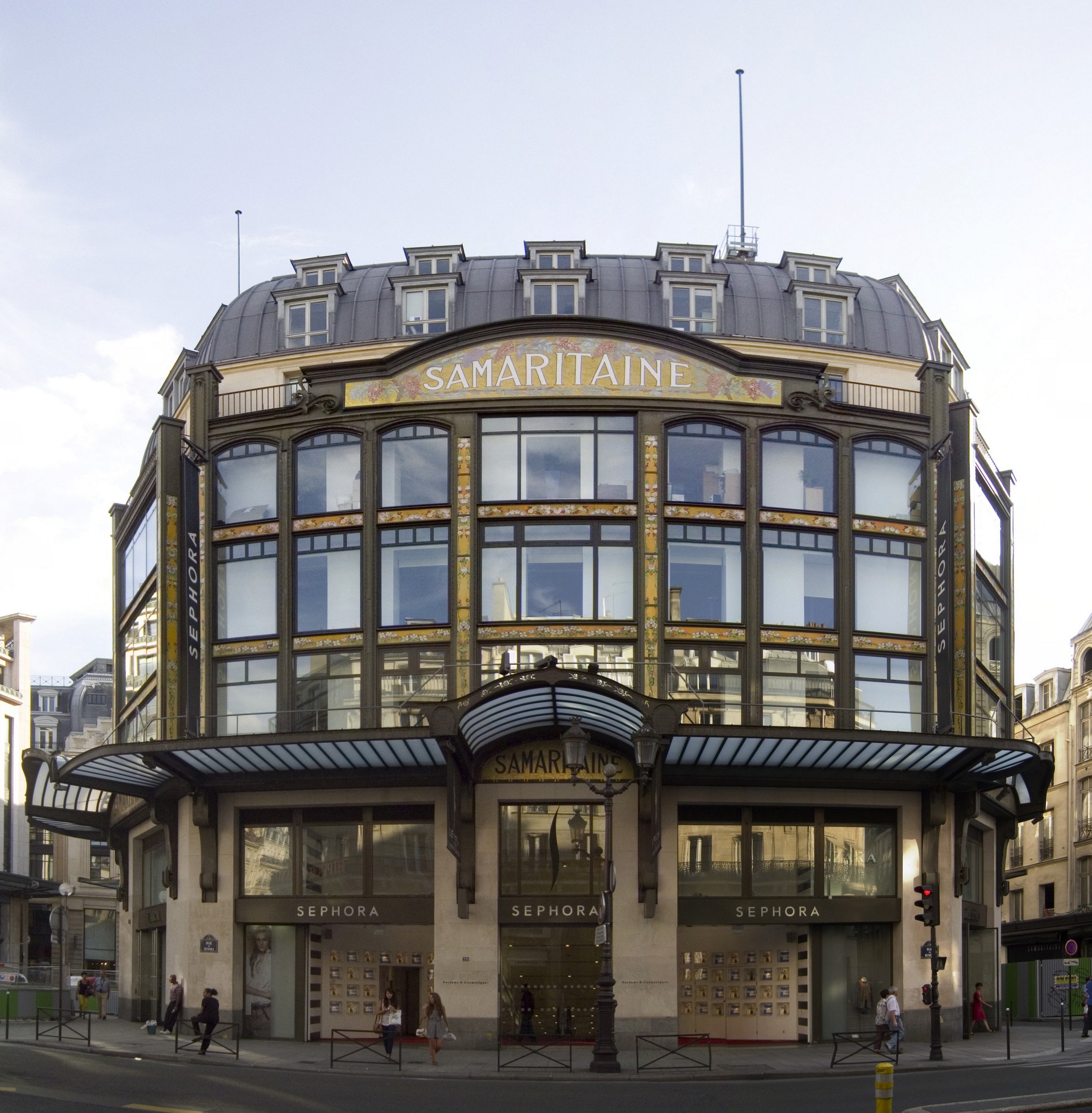
A Sephora cosmetics outlet in Paris
The Luddites were an organisation of 19th century English textile workers who opposed the introduction of newly-invented machines that were designed to improve output and reduce labour costs. The fors and againsts of their struggle have been the subject of much debate ever since, but they are still held up today as an example of either progress-stopping King Canute-style reactionaries or working class heroes, depending on one's point of view.

So what, in that context, are we to make of the current dispute which is pitting French trade unions against their chain store employers? The unions and Clic-C, their representative body in the chain store sector, have been taking legal action against a number of them in an effort to stop them opening on Sundays and late in the evening during the week on the grounds that the practice is damaging to workers' health and represents an erosion of their rights. The companies involved work in industries such as food supermarkets, do-it-yourself, furniture, luxury goods shops, and finance. They include Monoprix, Leroy Merlin, Castorama, Sephora, Bricorama, Apple, Uniqlo, Franprix, Abercrombie & Fitch and Marionnaud. Most industries in France are forced to close on Sundays, with the exception of those who work in tourism, transport and a few others.

Courts have come down in favour of the unions in many cases, and the chain stores concerned have been forbidden by judges to open on Sundays, with the penalty for not obeying being a fine of €120,000 per outlet for each Sunday worked.

But more and more of them have announced that they are lodging appeals and shall open on Sundays despite the ban, saying that not doing so would result in revenue losses of up to 25% and thousands of staff layoffs. They argue that most staff members are not obliged to work on Sundays and that those who do are volunteers.

This is borne out to some degree by the workers themselves, some of whom have held demonstrations in front of local prefectures over the last few days to protest both the unions' decision to have Sunday opening banned by the courts and the laws which govern it. Workers say that a ban would cost them anything up to 10% of their take-home pay, that they would lose bonuses for working on Sundays and that part-time workers who work on Sunday only would quite simply lose their jobs. Consumer organisations are also contesting the ban.

Both the workers and the consumer organisations are right, and for many reasons. The historical reason for banning work on Sundays was that workers used to work anything up to 80 hours a week over 7 days 200 years ago, often in very hard conditions. The ban was necessary and right at that time.

But the world has changed since those dark days. Whereas many women did not work 60 years ago and could thus do the shopping and deal with other chores, most families today need both parents to work in order to make ends meet, with the result that they have precious little time left at the end of the day to do their shopping and buy furniture, D-I-Y materials and other items.

Also, banning Sunday trading heavily penalises the tourism sector, as many tourists are used to being able to shop on Sundays in their own countries. That is why deluxe stores in Paris and other major cities are also to defy the ban, claiming that Sunday opening would create 5000 jobs in Paris alone. Supermarket chain store Monoprix is continuing to defy a ban on evening opening and claims that if they shut earlier they would be forced to shed 1500 jobs, again, in Paris alone.

From a wider perspective, France currently has the highest unemployment levels ever seen during the Fifth Republic, family incomes are under a sustained tax attack from the government, and the prospect of losing even more jobs for these reasons is therefore a highly unpalatable one.

French trade unions are antediluvian in nature. They are living in another era and their actions are based on ideological principles that are morally indefensible. The sad spectacle of unions attempting to all intents and purposes to get people thrown out of jobs and into the unemployment queue during the worst economic crisis the country has seen since the oil crisis in Seventies is an absurd and unedifying one. They deserve to fail, and fail they shall once the government finally gets off its backside and the fence and modernises the country's outdated Sunday trading laws.

--------------------

(Update: The only sizeable trade union to support Sunday trading is the CFCT, whose representative for the Paris outlets of the home improvement and gardening chain store Leroy Merlin - Jean-Marc Cicuto - says today that he supports the company's decision to defy the law and open on Sundays. He adds that "95% of Leroy Merlin staff in the Paris area are in favour of working on Sunday.")

Wednesday, 25 September 2013

It's my birthday today, and I'm 60 years old. Hmmm.....

Older guy still dreaming he's playing Woodstock blah blah blah.. :)
It's just before one in the morning on Thursday September 26th as I begin writing this blog entry, which means that I am now officially sixty years old. Yup, 60. Sixty-Years-Old. The big Six Zero. Six-Nought. Call it what you will.

I read an article in The Guardian recently that said that we are officially "old" at 60. So I suppose I must be old then if they say so. Problem is, I don't feel old. Far from it.

I've never felt better in my life! My professional life is as enriching as anyone could wish for, I am lucky enough to know some wonderful people I love dearly and who appreciate me too, I'm happier than I've ever been, I'm more confident than I've ever felt, I'm in good physical shape for my age and, despite all my mess-ups and mistakes over the long long years, I don't think I've turned out to be any worse than the next person. And god knows I could - or even should - have been a total fucking loser.

Truth be told, and without going into too much detail, I should have been dead years ago. My childhood was cut short at the age of thirteen by the death of both my parents, and I was pretty much left to fend for myself, which means that I had all the characteristics and credentials it took to be a criminal. No parents, a shattered family (it took me years to find my two sisters again as we had all been scattered to the winds), and an errant lifestyle. Rapists, pedophiles, murderers and all sorts of other sundry villains and criminals use their ruined childhood as a mitigating circumstance before their judges, but I somehow - and thankfully - managed to avoid that fate (although I did spend one night in prison for picking a fight with a pub owner in Hebden Bridge in Yorkshire on my 26th birthday. I was fined the equivalent of €60 the next morning and I thoroughly deserved it. It taught me a valuable lesson).

Drugs and alcohol? Oh, let's not talk about that but say we did okay? Lots of people I knew then are not here today because of their excessive intake of drugs and I'll not add to that. Suffice it to say that the drug and alcohol abuse that characterised my life until my forties should have killed me off, just as it did many people at that time. I can't even begin to remember how many times I woke up fully-dressed in the morning on the floor of my home with a massive hangover or acid, or opium comedown or whatever and asked myself  'how the fuck did I get home?' only to drag myself to the window to see my car, very badly parked, outside. How the hell I didn't kill myself, or, worse, kill other road users, is still, and shall forever, remain a mystery.

Then there are all the people I knew who died prematurely because of illness or accidents, those who died in car and motorcycle accidents, and even some children, who died for reasons ranging from contracted disease to unsuspected heart anomalies.The latter killed a girlfriend of mine in fact. We were both nineteen and were just picking up our coats on our way out of a discotheque when she dropped down dead on the stairs in just one second. It turned out that she had been born with a time-bomb heart condition that meant that she was condemned to die young.

When I was younger I used to think that people of sixty years of age were finished. They were old. They had nothing more to say or contribute to the 'modern' world which I thought belonged to me and me only. In a word, they were irrelevant has-beens to be put out to pasture. I thought I knew it all.

But now that I'm 60, I know that I still know nothing much. I learn new things every day. World events such as war and the cruel things people do to each other still shock and sadden me, and I have not, thankfully, become become blasé and cynical about the realities of life.

I still love people, I still love life, I still love living on this humble little planet, and I still feel that life has so much to offer me.

In other words - and truth be told - this, my sixtieth birthday, is the best birthday I have ever had. I shall enjoy every moment of it, and I can only be grateful for having been born and still being alive. The future? Oh, I'm old enough now to know that Tomorrow Never Knows.

Anyway, enough of all my ruminations and blatherings, so have a good day all.
Frip

Monday, 23 September 2013

The Kenya massacre and the most shamefully Chamberlian article the Guardian has ever published

I have been a faithful Guardian reader for 43 years, during which time I have seen many of the good, the bad and the ugly episodes that have illustrated its history. But never have I read such a crass piece of shamelessly opinion-pandering nonsense to equal that which was posted on the paper's website today by Simon Jenkins, former Times editor and current National Trust chairman.

Jenkins analyses the ongoing crisis in Nairobi, Kenya, and in his conclusion he deploys the well-worn - and arguably justified to a certain degree -  opinion that;
"The "war on terror" has failed on its own terms. It had made dozens of countries not pacified but terrified. By deploying violence against a succession of Muslim states, the world's leading powers have made their business its business and invited retaliation. They have not crushed al-Qaida any more than they have suppressed extreme Islamism. They have refreshed rather than diminished that extremism, and made the world less safe as a result."
Fair enough, although I shall not allow myself to be innocently tempted into developing the futile chicken-and-egg answer that 9/11 demanded a response, but was itself due to western aggression, which was in turn a response to other threats against the west etc and ad infinitum, but what does Jenkins think should be done faced with the mindless slaughter of about seventy civilians of many nationalities in a shopping centre by religiously and ideologically-motivated terrorists?  He says that the British Prime minister should, despite the fact that four British citizens are said to have been slaughtered in Nairobi as I write these words, ignore it, just as all western leaders ignore all incidents in which;
...the Somalian al-Shabaab sect merely shot up a street in Mogadishu...
He goes on to add that because large gatherings of people are vulnerable to terrorist attacks that....
It might be sensible to discourage like-minded crowds from gathering in one place, be they co-religionists or party faithful or merely the wealthy; 
...and that
The modern urban obsession with celebrity buildings and high-profile events offers too many publicity-rich targets. A World Trade Centre, a Mumbai hotel, a Boston marathon, a Nairobi shopping mall are all enticing to extremists. Defending them is near impossible. Better at least not to create them. 
In other words, Simon Jenkins is advocating that Britain and the West should appease terrorists by abandoning the beliefs and principles which hold that the free association of like-minded individuals in public is an inherently necessary right and an essential component of a democratic society, that western society should decree and enact a bland and anonymous social landscape in which neither rich, poor, religious, ethnic, political or other societal groups  may congregate, and that it should abandon or adapt its fundamental principles of freedom of movement because a terrorist organisation says so.

The Guardian is not to be criticised for publishing Jenkins' article - after all, 'Comment is Free' and that's how it should be - but Simon Jenkins' article is nothing more than an abject sop to terrorism and a rehash of the naive cowardice of Neville Chamberlain's paper-waving-in-the-wind capitulation to Adolf Hitler.

He should be ashamed of it.

Sunday, 22 September 2013

A lazy Sunday afternoon bike ride down the banks of the Rhône river

A Star Trek spaceship base... a municipal swimming pool on the left bank of the Rhône
It's autumn and most of us are enjoying the beginning of the Indian summer which seems set to last for a week over much of Europe. That's why I decided to get on my bike this afternoon and ride southbound along the left bank of the Rhône here in Lyon from the northern end of the city centre - which is a peninsula hemmed in by the Rhône on one side and the Saône on the other - to the southern suburb where it ends, and where I live. The weather was gorgeous!

Most of us go down to the river to potter about, but some people live on it in houseboats like this one. The centre of the city is on the other side.


Some of the Rhône's finest bridges were blown up by the German army in WWII in an effort to hold up its Allied persuers during its retreat from France in late 1944 and early 1945, but thankfully some of them were left untouched. Here's one of them.


Some people go jogging by the river...


...others hang out and play music under the trees....


...but whatever they do, they all appreciate the bar-barges which sell the cold drinks they need in weather like this.


Heading south out of the centre and towards where I live, there's less activity and people, but much more greenery and nature.


This swan is one of a couple which has lived here for a long while now and they are well known to the locals.


Can anyone tell me what this strange structure is? It has a door at the top and reminds me of a public toilet, although I'd rather take a leak behind a bush than swim out to that. And there isn't even a ladder!


The quayside disappears towards the end of the peninsula and gives way to grassy slopes upon which people can relax in the sun and drink in the peace and quiet.


I've lost count of the number of times I've seen couples canoodling here in this little haven of peace and tranquility.


And this is where the peninsula, and the bike track, ends.


If you were to get on a boat from here and continue on down south, you would sail through the valleys of the Ardèche region and onwards to the charming towns of Valence, Montelimar and Avignon before reaching the Mediterranean Sea near Marseille, and, if you wanted to go further still, you could continue on to Northern Africa and the rest of the world......

Friday, 20 September 2013

The immigrant's story

Photo credit: Chareles Platiau/Reuters
My girlfriend works in a school in a poorer area of Lyon in which almost 90% of the children are of immigrant origin. It's a hard job. Violence is never far away and social problems are rife, but the staff does their best to educate their pupils against the odds.
The school recently hired a secretary to the headmistress. She is a young woman of Algerian origin who arrived in France from Algeria not long ago to join her husband, who earns a small salary. She too is on a low salary and they have a young child.

The secretary does her best and has many qualities. She is kind to the children and has earned their respect, she has an agreeable personality, she gets to work on time and she dresses impeccably.

But there's a snag. She was hired on a 'Contract of Insertion', a kind of contract which is destined to integrate immigrants and poorer people into a working environment despite what may be considered as being rather inadequate qualifications and abilities. Her level of French is very poor, she has problems writing from left to right - she was educated to write Algerian Arabic from right to left - she is very bad at taking messages by phone, and she refers to those who do so by saying things like 'an important person called who is called Mme Dupont', when Mme Dupont is just a teacher like everybody else. In other words, she is overawed by it all.

Not only that, she may be good at dealing with children but her social skills with adults are, shall we say, of a finite nature. The regional School Inspector turned up the other day and she welcomed him with a cheerily offhand 'hey hi, how're ya' doin'?' NOT what is expected in a socially rigid country like France, in which hierarchies are rigorously and respectfully respected.

Error after error, gaffe after gaffe, it has got to the point where emails she writes are checked and changed before being sent and in some cases the staff do her work for her. The staff feels for her and tries to help her as much as possible, but it's an uphill (losing?) battle and everyone, including the young woman concerned, knows it.

My girlfriend says that the secretary recently pleaded, begged, her and other staff to try and ensure that the school don't fire her after her trial period. She said that she would do her very best to improve her French and her ways of dealing with people in the context of French culture. My girlfriend answered that she would try to get her enrolled for free French lessons. 

Everyone likes her a lot, but it is as plain as day that she is just not up to the job. Despite that however they are trying to rally round and help her.

The poor girl is petrified of losing her job and ending up on a state pittance for doing nothing to contribute to the country. She wants so much to succeed and she is desperate to do so. But even with the best will in the world of everyone concerned, it is by no means certain that she will still have a job in a few weeks from now.

And if she loses her job? Oh, her husband may well abandon her and her baby because they are a financial liability, and she may well end up living in poverty. 

An awful dilemma this. Not all immigrants want to milk the system, but not all are able to find and keep work either. What can be done about it? That is for the movers and shakers of France to decide.

Meanwhile, her immigrant's story, that of a courageous young woman who wants no more than to earn an honest living, shall remain unheard and unread, except for those who have just taken the time to read this little blog post, parked up as it is, anonymously, in a tiny corner of the Internet........