Showing posts with label crime. Show all posts

Wednesday, 2 October 2013

A self-confessed pedophile is released on bail to await his trial. WHAT????!!!!

A 27-year-old military serviceman from Toulon in France who stands accused of repeatedly raping his niece over a period of three years has been released on bail.

The accused man has already admitted that he raped his niece on five occasions, the first of which was on July 1, 2009. The girl was 11 years old at that time. He is also known to have accessed pedopornographic images on the Internet over a period of several months.

The judge justified his decision to free the man to await trial instead of holding him in custody pending trial by saying that he had "furnished details about all the acts of which he is accused", that nothing "would lead one to consider that he lied during his spoken statements to the police", and that there is nothing to indicate "that there may be other victims". The judge concluded that the accused "presented solid guarantees that he would not skip bail." 

It goes without saying that this judgement has outraged many people. The police are furious that long months of hard work designed to put a suspected repeat-offender pedophile behind bars has failed even before his trial, the public - and parents of young children in particular - is dumbfounded, and it's the same story for all those associations and other organisations that fight child abuse and pedophilia. 

And I am outraged too. I am absolutely incensed that in this, a supposedly modern and progressist society which says it respects human - and that includes children's - rights, a judge can free a man who has admitted that he raped a child five times. I am sickened by the judge's mealy-mouthed, totally biased and subjective reasoning, and - although I would never dream of voting for them myself - I fully understand why the French political party which is making the most positive progress in polls at the moment is the.......


.......extreme-right National Front. 

Tuesday, 11 June 2013

Financial corruption by politicians in France is the stuff of which banana republics are made

Here is a rundown of the background to all the stories I have read today in the French online press which concern ongoing court cases and investigations involving French politicians, almost all of whom are accused of various kinds of financial corruption. It makes edifying reading, so enjoy, for want of a better word.

Jean-Noël Guérini.
Guerini is a Socialist and President of the Bouches-du-Rhône region, which includes Marseille, a city with major corruption and mafia problems, and he is facing charges of passive corruption, influence peddling, criminal conspiracy to commit crime, and illegal restriction of market access to companies wishing to submit tenders for public works projects. All this is in the context of his alleged handing out of contracts for kickbacks to companies owned by his brother or the mafia. He has refused to go to some court convocations, and has claimed he was ill to avoid going to others. Courts have also charged various other local politicians, businessmen and mafia members with various offences related to the Guerini charges. And no, I didn't make an error at the start of this description of him, he is, incredibly, still a regional president in charge of hundreds of millions of taxpayer euros.

Nicolas Sarkozy.
He needs no introduction but some of you may not know much about the fact that he has been charged with breach of trust by means of the abuse of the reduced mental faculties of the victim. This case revolves around allegations that he and others personally obtained envelopes stuffed with banknotes to finance his 2007 election campaign from Liliane Bettencourt, who is the heiress of the L'Oréal cosmetics conglomerate and has a net worth of over $30 billion. Bettencourt was made a ward of the state in 2011 for the poor state of her health and being incapable of the management of her fortune, and she has also been placed by a court under the guardianship of members of her family on concerns about her declining mental health, although she has appealed this latter judgement. This case forced the replacement of Sarkozy's then Budget minister, Eric Woerth, and about 20 other people have also been charged with varying offences in relation to this affair.

Christine Lagarde and the Lagarde-Tapie affair.
A former Economy minister in François Fillon's government, she is now Managing Director of the International Monetary fund. Lagarde is an assisted witness who now stands to be charged with offences related to what is known as the 'Lagarde-Tapie affair'. She is under investigation in relation to her role as a minister in an alleged government decision to illegally settle the court battle between businessman and former minister Bernard Tapie and the Credit Lyonnais bank over alleged fraud concerning the sale of Adidas, a company Tapie owned at the time. Tapie was awarded €405 million in compensation after what is alleged to be government interference in the case on Tapie's behalf in exhange for his support for Sarkozy during his 2007 election campaign. Several other ministers as well as Nicolas Sarkozy are also suspected of being involved in the affair, as are various lawyers, heads of major companies and political advisors, some of whom have spent or are spending time in police custody. Bernard Tapie has not yet been charged but if the case goes ahead he most certainly shall be. Not that he isn't used to being in court of course, given that he was jailed some years back for corruption.

Claude Guéant.
Guéant was Nicolas Sarkozy's Interior minister and the General Secretary of the Elysée. He is under criminal investigation in several affairs.
a) He is suspected of being involved in the illegal financing of Nicolas Sarkoz's election campaign by Muammar Gadaffi by transiting €500,000 through his own bank account.
b) Judges have found evidence that he may have received up to €240,000 in secret government cash funds between 2002 and 2004 and creamed some of it off for his own benefit.
c) He is one of several senior government figures who are suspected of being involved in the Lagarde-Tapie affair.
d) He is facing charges of fraud, receiving stolen goods and complicity to commit an offence for his part in the creation of a non-existent and well paid political advisory job to help a political ally and friend by using his influence as Sarkozy's head of the Elysée.
Again, other politicians are implicated in these cases.

Jérôme Cahuzac.
He was François Hollande's Budget minister in charge of dealing with tax fraud until May, when he resigned after being himself charged with tax fraud. He admitted holding an offshore bank account for 20 years which contained €600,000 of laundered money when investigations began. Cahuzac is in the news today because - and contrary to previous declarations - he will no longer cooperate with judges and investigators. It is suspected that his illegal activities were known to other ministers, who said and did nothing to stop him being offered the job of Budget minister.

Michèle Tabarot.
Tabarot is second-in-command of the UMP party after Jean-François Copé and is being investigated for her role in a massive €72 million real estate fraud in Spain involving her brother, her political advisor (who was a shareholder in the incriminated company) and another politician, all three of whom have already been charged with various offences. She is alleged to have used some of the money to finance her political campaigns.

The Socialists of Béthune, in the Pas-de-Calais region.
Too numerous to name here, dozens of socialist politicians in the town Béthune, including the Mayor, have been charged with offences including forgery, the use of forged documents, the embezzlement of public money, passive corruption, active corruption, forged invoices and many more. The Federation of the whole of the Pas-de-Calais region is also under investigation. The Socialist Party in Béthune was described as a judge as having created "a mafia climate" in the town. Private planes paid for with taxpayers' money, the extortion of illegal commission from companies tendering for local authority contracts, fraudulent accounting practices, you name it, it's on the charge sheet.

------------------------

As I said at the beginning of this entry, these cases are just those which appeared in the French press today and as such they do not represent all of the ongoing cases against and investigations into French politicians. There are many more and and even more are in the pipeline. Very few of the well-known politicians involved in these scandals shall ever be found guilty, never mind go to prison.

This is the stuff of which banana republics are made and it goes a long way to explaining why the vast majority of French citizens think that most politicians are corrupt. It also proves that they are quite justified in thinking that. But why do the French people tolerate this extraordinarily vast and generalised amount of corruption by their politicians?

Was Charles De Gaulle right after all to say that "les français sont des veaux", an expression he used to say that the French were too indolent, meek and lazy to fight for what was right, even when it was in their own interest?

It obviously seems that way at the moment, but who knows, things may change one day. That said, don't hold your breath whilst waiting...


Friday, 7 June 2013

The killing of Clément Méric was both predictable and inevitable

Demonstrators here in Lyon, France, yesterday (my photo)
Clément Méric, an 18-year-old hard-left militant, was killed in Paris earlier this week by extreme-right wing militants. A classic case of ultra-right violence? Not so fast. Those who attacked Méric might be guilty of the murder itself, but they are not the only ones responsible for it, and those who are ultimately responsible for the detestable climate of political hate and debate in France which inspired this crime shall never be brought to justice.

The first and most obvious culprit is the cluster of extreme-right wing groups to which Méric's alleged killers are said to belong. They have been upping the violence stakes for months in their fight against the left, homosexuals, foreigners and anybody else who does not share their opinions. An example of this can be seen here in Lyon, where the St Jean quarter has been terrorised for two years by extreme right wing groups who have been smashing up bars and businesses owned by gays and people of immigrant origins. Locals are beginning to avoid the area at night and tourism is being affected by it. But because it takes two to tango - and two to fight - a long hard look also needs to be taken at their extreme-left wing enemies, and French film director Marc-Aurèle Vecchione has done just that. His 2008 film 'Antifascist skinhead hunters' paints a grim picture of the years-long state of gang warfare between left and right wing skinheads. These groups even dress the same, with a marked preference for Dr. Martens boots and clothes from the Fred Perry and Ben Sherman brands. Shops which sell these items attract both groups, and it appears that Méric was at a private sales event involving clothes from these brands when he got into an argument with others in the shop who were members of right-wing groups. The fight which ensued left him brian-dead and he died yesterday afternoon. Méric, as it turns out, was a hard-left militant who was well known to opposing groups. Both left and right wing groups have incontestably contributed to the climate of hate which led to Méric's killing.

But these groups did not exist in a vacuum, and they were egged on by another guilty party, the organisers and supporters of the 'Manif Pour Tous', the anti-gay marriage group which has been staging inflammatory demonstrations over the last few months designed to provoke violence and the police reaction to it which ensued on several occasions. This organisation's hate-filled and violently homophobic bile was directly responsible for a spate of vicious attacks on homosexuals which hospitalised several of the victims. Just a few weeks ago the MPT's iconic figurehead - Frigide Barjot - addressed a menacing menace to President François Hollande in which she said "Hollande wants blood and he's going to get it".  She partially retracted that statement later, but it was too late. These demonstrations attracted members of extreme-right wing groups who caused much of the violence, and Méric's suspected killers - who were arrested yesterday - are said by police to be members of them. It would be naive at best and malicious at worst to suggest that the Manif Pour Tous did not contribute in its own indirect way to Méric's murder by provoking violence and civil disobedience. The killers of Méric were useful, if dangerous, idiots who were manipulated by others and Barjot finally has the blood she promised would flow.

The third group category of people responsible for the deleterious climate in France today is France's political class, which has spent years embroiled in spiteful and violent 'debate', for want of a better word, and mutual insult, all of which has triggered a mimetic reaction in French society. The biggest offenders here at the moment are certain anti-gay marriage members of the right-of-centre UMP opposition party. Some of them, including party leader Jean-François Copé, attended Manif Pour Tous demonstrations knowing full well that they were likely to end in violence, which they then blamed on 'government provocation'. They promised to scrap gay marriage if elected in 2017 and - in a break from republican tradition - some of them even called for demonstrations to continue even though the law has been voted. Some mayors have said that they will refuse to celebrate gay marriages and there have been vague calls from the right about 'continuing the resistance' and 'civil disobedience'. The left has generally been less provocative lately, although they too have a history of inflammatory statements. One example that nobody will forget here was the 2007 call by Ségolène Royal for people to "take to the streets" to protest against the election of Nicolas Sarkozy, who had just trounced her in what was after all a democratic election. Jean-Luc Mélenchon is another left-winger with a reputation for fiery provocation, and his language is peppered with words such as 'revolt', 'revolution' 'a people's uprising' and others. Hardly a week goes by without some politician using words such as 'fascist', 'Nazi', 'collaborator', 'Vichyist', 'gas chambers' and others to describe their opponents and their policies. More sickeningly still they have all, left and right, been using Méric's murder to score cheap political points and recuperate the event since it occured. The atmosphere in French politics has been getting more and more violent over time, with hate-filled diatribes and appeals for civil disobedience by politicians of the right and extreme right finally becoming the norm. They have no shame, and they refuse to accept their part of the responsibility for the social and political climate in which Méric's killing took place.

Finally, bad enough as all this is, yet another element been whipping people up into a frenzy. Its name? The French media. Extremists of all colours crave platforms of expression and media exposure - without which they would be much less effective - and the press has been generously dishing out all the coverage they desire. TV debates featuring politicians who are known to despise each other are common. Viewers lap up these vulgar spectacles, in which politicians insult and shout at each other, walk off the set, treat journalists appallingly and generally behave like the foul-mouthed louts they are. Audience figures are sky-high and everyone is happy. The press publishes sensationalist headlines and interviews with extremists of both left and right, and contentious subjects are the object of countless articles of a polarising nature. The press has also played a part in the climate of hate and fear which led to this week's murder.

The murder of Clément Méric for reasons linked to political hatred was a despicable act, but worse still, it was both predictable and ultimately inevitable due to the underlying reasons which formed the backdrop to it. If French society fails to rein in the excesses of extremist groups, French politicians and the press soon it is only a matter of time before someone else is killed for similar motives.


Monday, 27 May 2013

A violent Paris risks being deserted by tourists

A bus full of tourists being attacked by rioters in Paris
If you had been a tourist in Paris yesterday you would most likely have come into contact with an anti-gay marriage demonstration. It was attended by anything from 150,000 to one million people, depending on whose figures you believe, and you may also have been unlucky enough to witness the violence which followed it.

The demonstrators arrived in downtown Paris just after lunch from four different directions, and although the bulk of the demonstration passed off without major trouble, over 100 people were arrested for public disorder-related offences. But after the demonstrators had dispersed a group of several hundred extremists stayed on and attacked journalists and riot police. Paris looked more like a war zone than a peacetime city (images and videos here.) Sporadic incidents continued here and there in the streets for hours before things finally quietened down. There had been 350 arrests in all and 36 people, almost all of them police, had been injured.

This was not an isolated event. Yesterday's demonstration was only the latest in a series of similar ones this year, all of which have led to various degrees of violence, looting and the destruction of property, and there were similar scenes during the 'celebration' earlier this month by fans of the Paris St-Germain football team to mark their winning campaign in the French league. Rioters attacked shops and people and in one instance the looting of a bus full of Japonese tourists was filmed. It makes chilling viewing.

Another worrying phenomenon in today's Paris is the proliferation of organised crime in the form of gangs of pickpockets and violent thieves who threaten tourists and force them to hand over their money, cameras and other objects of value. They operate all over the city centre, in shops, bars, tourist sites, public transport (the Metro in particular), hotels and elsewhere, and things have become so serious that security personnel at the Louvre went on strike recently to protest the lack of government measures to combat these bands, which even operate within the museum itself. In one well-publicised incident, an aide to Bill Clinton, who was visiting Paris, was robbed of cash whilst using a cash distributor.

Finally, there are regular instances of running battles involving members of rival gangs who come downtown from the suburbs to slug it out. Shopkeepers in Les Halles in particular have witnessed several of these battles and gone on resignedly to clear up their smashed shop fronts afterwards.

No wonder then that alarm bells have started ringing. Police are trying to step up patrols but are hampered by a lack of manpower, and foreign embassies are issuing advice to tourists and warning them to be vigilant. The Chinese embassy went one step further and lodged an official complaint against Parisian authorities, whom they accuse of not doing enough to protect Chinese tourists from aggression.

All of this is also penalising businesses, which is why a representative of up-market retailers recently reminded the authorities of their obligation to protect tourists. "Paris is becoming hell for tourists in terms of personal safety" he said. Another representative said that "[Paris has] a catastrophic image."

Authorities, hotels and businesses, both Parisian and national politicians, and now the press, France is finally waking up to the reality of a capital city which is in danger of being considered by tourists to be a place to avoid, and they are demanding that something be done about it.

They are quite right to do so. After all, Paris is France's window on the world. Most of them consider that if something isn't done to improve the situation soon the result will be a worsening reputation, falling tourist numbers, falling revenue, and yet another dent to French national pride, which has already taken enough hits as it is.

Let's hope that something is done to turn the tide, and quickly.

Wednesday, 24 April 2013

Hollande says no to a 'social amnesty' for trades unionists found guilty of crimes

A badly organised office
Back in February, the French Senate endorsed an insane law proposal submitted by the Communist and other hard left parties for a 'social amnesty' for trades union strikers who vandalise property and commit various other acts of hooliganism in the name of their cause. This law, although it would have excluded those found guilty of physical violence, would have ensured that all those who have been found guilty of other strike and demonstration-related crimes since 2006 would have had their sentences overturned. Pending cases and those on appeal would have been dropped.

The Senate was able to vote in favour of sending it to parliament for a vote because all left-wingers supported it, thus adding to the slender majority of the ruling Socialist party.

Offences that come under the proposed law's remit which I remember being committed by strikers since 2006 include the following;

Ransacking offices, stealing equipment, destroying machinery, arson, cutting power supply, pouring dangerous chemicals into rivers, tying explosives to gas bottles, diesel tanks and reservoirs and thereby threatening to blow up property, threatening behaviour, damaging trucks and other vehicles, fraud, illegal occupation of property and ransacking public buildings.

All of these ofences would have been amnestied had the bill been voted by parliament, but it was not to be.

Hollande and the government have decided otherwise, despite many socialists' advice to the contrary, and so it was that the parliamentary Law Commission decided today to throw the proposed law out. Every single clause of it.

And so much the better.

Sunday, 24 March 2013

The Sarkozy-Bettencourt affair: the long and courageous fight by French judges to bring elites to justice

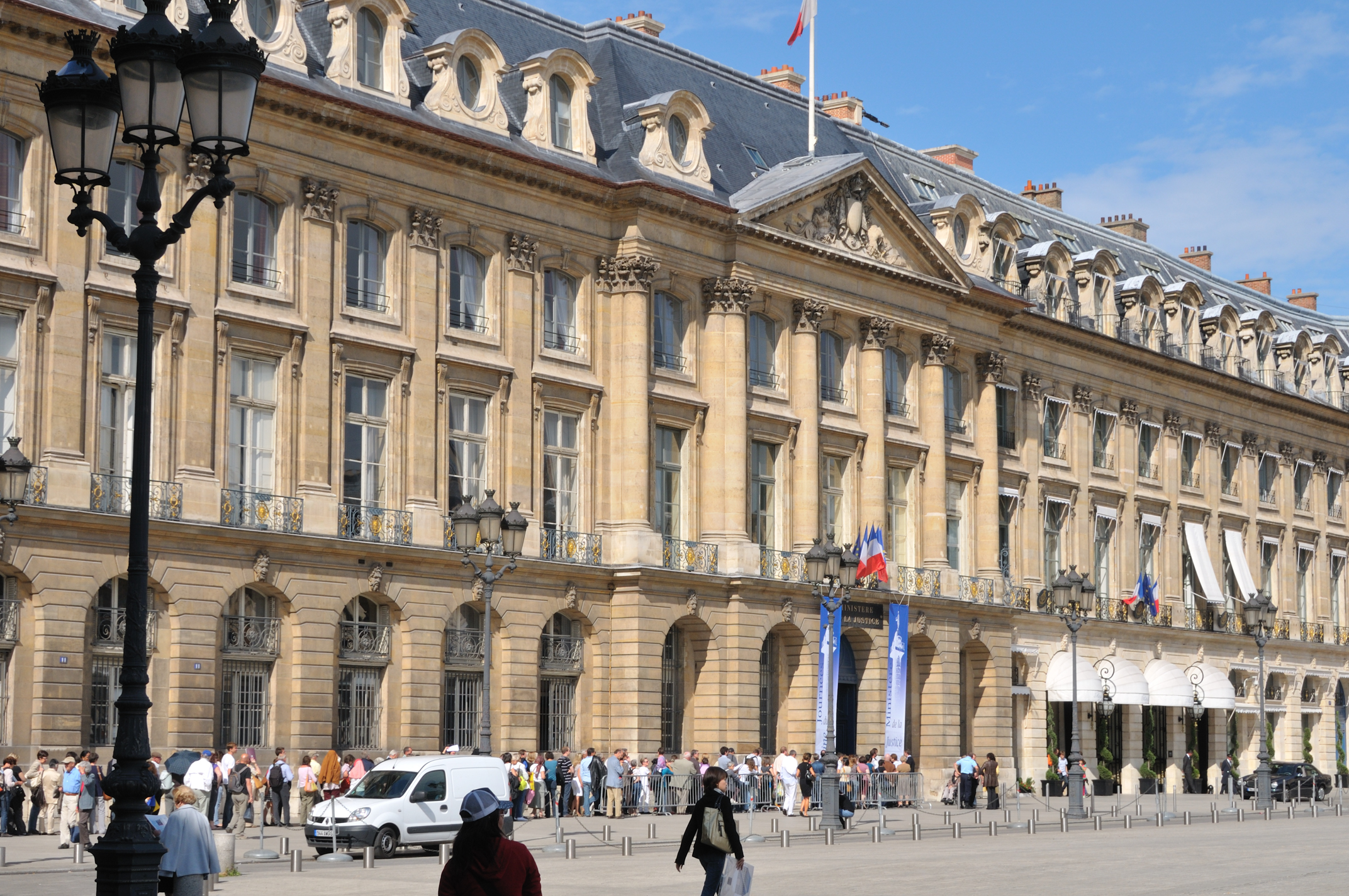
The French Ministry of Justice, Paris
French judge Jean-Michel Gentil has filed preliminary charges of 'abuse of a person in an impaired state' against former president Nicolas Sarkozy. The charges relate to  a €152,000 donation to his 2007 election campaign by Liliane Bettencourt, the ageing heiress of the sprawling L'Oréal cosmetics and beauty empire and the world's third-richest woman, with a net worth of €39 billion. Bettencourt, now aged 90, has been involved in a highly mediatised and long-running family feud over her fortune, and her failing mental health eventually led to her being put under judicial supervision at the request of family members.

Sarkozy entered the picture in 2008 when it was revealed that Bettencourt's chief accountant had alleged to police investigators that the heiress had authorised the Sarkozy election campaign fund payment after meeting him in 2007. The accountant also said that Sarkozy had visited the Bettencourt home several times and that each time he left with a brown envelope containing banknotes.

His UMP political party's offices were subsequently raided by judges looking for evidence of wrong-doing, and the next two years saw many witness statements being taken, several people being charged with various related offences, and efforts by judges to access Sarkozy's bank accounts are ongoing. 

The political reaction to the news was both instant and predictable. UMP politicians have embarked upon a virulent crusade against Gentil's decision, which is best summed up by former Sarkozy henchman Henri Guaino who told an interviewer that the judge's decision was "irresponsible", that he had "dishonoured the institutions" as well as "[French] justice." The accusations, he said, were "grotesque...unsupportable...unbelievable...intolerable". Meanwhile, Hollande and his socialist government have wisely decided to refrain from seeking to gain cheap political capital from the affair. Mind you, they can hardly do otherwise seeing as Hollande has just had to fire his Budget minister, Jérôme Cahuzac, after the latter was put under official investigation by a judge earlier in the week in relation to accusations that he has ferreted what could be illegally gained money out of the country and into a Swiss and other bank accounts.

More importantly though - and in a clear sign that the Sarkozy affair is set to be a viciously fought battle between Sarkozy and Gentil - it emerged yesterday that after being charged face to face by Gentil during the charge convocation the mood allegedly turned ugly, with Sarkozy leashing a veiled yet implicitly menacing threat, promising that "I'm going to take this matter further, make no mistake about it".

So the battle lines have been drawn. But these are no new battle lines, and there is no new front in the bitter and eternal war which has always pitted French presidents and other elites against a legal system which is doing no more than what is is mandated to do.

The unfettered independence of the French judicial system is enshrined within the French Constitution, but France is a country which is having many more problems putting the theory into practice than are many other western countries. Politicians and others in all countries try to influence their justice systems in one way or another, but the exceptionally porous nature of the relationship between the French justice system and political power is noteworthy.

Whereas it has not been uncommon in many other countries since the 70s to see politicians, including presidents and prime ministers, investigated and/or charged with alleged offences, and pay heavily for them, only one French president has ever been found guilty of an offence, with Jacques Chirac being handed down a 2-year suspended sentence for embezzling public funds after a trial which he did not attend due to illness.

There are two main reasons for this state of affairs, the first being that French presidents are immune from prosecution during their mandate. This means that they cannot be charged with alleged offences committed whilst in power until they are no longer president. And even if charges are eventually brought the French legal system permits endless legal challenges and procedurial objections to be lodged against charges as well as the possibility of endless appeals. The result is that cases become heavily diluted over time, that which makes proving guilt very difficult.

The second reason is direct political interference in ongoing cases. Judges can be removed from a case if a president fears they may be getting uncomfortably close to the truth, and governments often refuse to hand over pertinent documents and other evidence to investigating judges. Nobody here will forget how Alain Juppe's Justice minister, Jacques Toubon, tried to force a prosecutor back to France from his holiday in the Himalayas in order to persuade him to drop a case against a political ally (Paris Mayor Jean Tiberi) which had been brought by his adjoint. Toubon even ordered a helicopter to fly him down from the mountains! The prosecutor refused on this occasion. Toubon is also known for having ordered police and prosecutors who were on their way to raid the offices of another political ally to search them for evidence of fraud to turn back. He was obeyed.

Also, several high-profile cases of a very sensitive nature involving presidents - including Sarkozy - have been deliberately bogged down by endless presidential foot-dragging. They include the Taiwan frigates case, involving kickbacks to political leaders in exchange for Taiwan's agreement to buy French frigates. This case also involves the highly suspicious deaths of several witnesses. Another case is the Karachi bombing, in which a dozen French engineers were killed in the city whilst doing highly sensitive work for the government on submarines. This case has never really got off the ground either.

Sarkozy went even further whilst in power. He removed a number of inconvenient magistrates and prosecutors and used his friendship with famous Parisian magistrate Philippe Courroye to ask him to refuse to name an investigating judge for the Bettancourt case, which was making too much progress for his comfort. Courroye obeyed, much to the anger of magistrates and judges alike, and the case was thus dragged out. Sarkozy then went on to quite simply eliminate the functions of examing magistrates, thus strengthening his hold on the justice system. Other legislation was also introduced that would attempt to weaken the justice system, to the point where even his political allies were becoming afraid of the consequences of such actions.

But Courroye eventually fell into disgrace for reasons relative to other cases he was handling, and the investigation eventually got back on track after the alleged Bettencourt payments hit the headlines. Gentil was finally put in charge of the case, his work now made easier because Sarkozy is no longer president, and Sarkozy has now been charged.

This affair and the many revelations of meddling in the justice system it has led to has debunked the myth of an independent justice system in France. Sarkozy's meddling is the straw which broke the camel's back, and his being charged represents a clear victory for the many honest magistrates, judges and others who are trying to do their job despite heavy political interference. They deserve respect for their perseverence and courage.

But don't count on further improvements anytime soon. François Hollande promised to repeal and remove the system of presidential immunity from prosection during his election campaign, but now that he is in power he and his advisors have backtracked. The project as it stands today would only remove immunity for a limited number of civil offences - i.e. extremely minor cases, and even then they would be difficult to prosecute - but immunity shall remain for embezzlement, fraud and other criminal offences, that which renders the legislation toothless.

France's magistrates and judges may have won a victory by charging Nicolas Sarkozy, but the war for judicial independence in France is far from being won.

Friday, 22 March 2013

The Marseille gangland payback execution video

Marseille suffers from drug-related crime and murder just like any other lage city, and it too has its share of rappers from underprivileged areas who produce videos which illustrate how the murky drug underworld goes about its business. One of those rap groups is Kalif Hardcore, who are from Marseille, and they produced a documentary-song video last year about the cruel reality of life in the drug-dealing world. They called it 'Marseille la Kalash Liga One' ('kalash' meaning a kalashnikov assault rifle - a weapon of choice for France's gangland killers).

The video depicts the cruel reality of life in the ghettos, where drugs and violence are omnipresent, and it features a sequence in which a young drug-dealer steals a bag of drugs from a lady who was 'looking after it' for other drug-dealers. His identity is discovered and there follows a scene in which he is abducted by armed men, driven to a lonely spot outside the city after being handcuffed and beaten up, thrust down onto the the ground, and shot in the head as payback. The killers then pour petrol over his body and set it alight before leaving the scene.

The 'victim' was played by 19-year-old Nabil Sedik, a young man from one of Marseille's poorer areas, and the drug-minding woman was played by his mother.

-----------------------------------------

The harrowing scenes contained in the video were of course fictional, and Nabil Sedik walked away unscathed from that fictional killing field, but real life underworld revenge killings such as that shown in it are not the stuff of fiction. They are a fact of life, and they have occurred every 10 days in Marseille since January of last year. The most recent of those executions took place a few days ago, when a young man was kidnapped in Marseille. His body was later discovered in the boot of a burnt-out car. He had been shot to death.

His name? Nabil Sedik.

His mother buried him on Tuesday.

Friday, 8 March 2013

The odious arrogance of Oscar Pistorius

Oscar Pistorius
Oscar Pistorius was charged in a South African court a while back with the premeditated murder of his girlfriend, Reeva Steenkamp, on Valentine's Day of this year. He had shot her four times with a 9mm pistol as she cowered behind a bathroom door. He says he thought she was a burglar and the prosecution contends that he knew she was in the bathroom and that he had shot her deliberately.

After the initial court hearing Pistorius was granted a million rand - £73,000 - bail and released under strict conditions which included probatory supervision, compulsory drug and alcohol testing, an interdiction to return to his home, or to approach witnesses, and an interdiction to travel, either inside or outside of South Africa. That which appears reasonable given the gravity of the charges.

Today however it is reported that he has decided to challenge these bail conditions. All of them. Because he thinks they are "unfair".

In other words, Oscar Pistorius, a man who has been charged with cold-blooded murder, considers it to be injust that he be subjected to almost any kind of surveillance or obligation whilst awaiting trial later in the year. He wants to be able to go abroad at will (albeit with police permission), live in his home, next to those of witnesses, and he doesn't want to be under supervision.

Let's be clear about this. Here is a man who has been charged with a vile assassination who wants to have all the freedoms accorded to all free citizens, a man who, by challenging his bail conditions, has given a slap in the face to Steenkamp's memory and her family, a man with no compassion or feelings except when it comes to his own well-being.

Guilty or not of Steenkamp's murder, Oscar Pistorius epitomises the macho and sexist culture of white South Africans in a country where gun crime and the rape and killing of women have reached massive proportions. He has a revoltingly smug sense of entitlement which - and let's be honest - finds its origins in the apartheid era, and if the courts grant him his wishes then all I can say is god help women in South Africa.

Thursday, 24 January 2013

Florence Cassez is freed...and the witch-hunt begins

Florence Cassez in Mexico
Florence Cassez is a 37-year-old French woman who was arrested in Mexico in 2005 on charges of organised crime, kidnapping and the illegal possession of firearms. Found guilty on all counts in 2008, she was jailed for 90 years, although her sentence was reduced to 60 years in 2009. The Mexican Supreme Court finally threw out all the charges during a hearing yesterday, and she was freed. She arrived back in France this afternoon.

Cassez had gone to Mexico in 2003 to live near her brother, find work and start a new life. One year later she met Israel Vallarta, a Mexican, and they began a relationship which continued until her arrest, at Vallarta's home. Vallerta was arrested at the same time and charged with the the same offences and many more.

She insisted all along that she was innocent, and Vallarta corroborated her story by stating that she had not been present at any of the kidnappings or other crimes which he was accused of and that she knew nothing about them. Vallarta is still awaiting trial. President Sarkozy made several high-profile attempts to obtain her extradition to France to serve out her sentence, demand Mexican President Calderon's clemency in the matter, or have a retrial, but all his efforts and those of others failed.

However, it became obvious early on that her conviction was a farce, and the truth began to emerge when it was revealed that her arrest at Vallerta's home had been staged. They had in fact been arrested on a highway the previous day, but the police and authorities decided that as no press reporters and photographers were present they would keep them in Vallerta's home overnight and invite the press the next day to film the bogus arrests, during which Cassez and Vallarta were paraded in front of the cameras before the police declared that the operation had been a triumph against cartels and drove their prisoners away. Once the truth came out, the police and authorities admitted what they had done, and the Mexican media apologised for falling for the story.

Many other details of police misdoing emerged, including that they had misled the courts on a number of occasions and fabricated evidence.

The judge at yesterday's hearing, which had become inevitable given the flood of suspicions that the investigation had been botched and illegal from the start, freed Cassez after accepting that her civil and human rights had been abused, that there had been police misconduct and fabricated evidence and that her trial had been truncated.

Her plane touched down at Roissy airport at 13:45 Paris time and she was home. A happy ending? Far from it, and Florence Cassez is about to become the victim of another inquisition - a witch-hunt by the French public.

I followed live comment threads on the story today in the French press, and the venemous, hateful cynicism to be read in the majority of the comments made my blood curdle. Here are a few examples, which I have copied and translated from the comment thread of this live article.

"Not all of France is for Florence Cassez, far from it, as she is probably guilty of kidnapping..."
"Nothing proves that she is innocent or the victim of an error of justice, but she's French and that seems somehow sufficient to absolve her."
"Excuse me, but she's a liar. She was a liar yesterday, she is a liar today and she will be a liar tomorrow."
"Not only is she guilty, she's an idiot."
"Some countries heap praise upon their scientists, but we heap praise upon our criminals."
"Florence Casses is a French citizen who committed serious crimes in a foreign country."

Just how is it possible that people can be so gratuitously and offensively vindictive? These and other comments like them are a nausous cesspit of abhorrent malevolence, and they represent just the very beginning of what shall prove to be a long-running witch-hunt.

Does the treatment of Cassez remind you of that meted out to another woman in similar circumstances a few years ago? Her name is Amanda Knox. She was the American exchange student who was found guilty in Italy in 2009 along with two other men, one of whom was her boyfriend, of the 2008 sexual assault and murder of Knox's flatmate, English student Meredith Kercher. She was sentenced to 26 years in prison. Her boyfriend was sentenced to 25 years and the other man to 30 years.

Both Knox and her boyfriend were released in 2011 after their convictions were quashed by a panel of judges and jurors who found that that there was a "material non-existence" of evidence to support the charges, that DNA testing and other investigative procedures had not been followed, that they had been mistreated by the police and that the trial procedure was highly flawed. The other man is still serving his sentence, although it has been reduced on appeal.

Knox too (but not her boyfriend, which is significant) was 'welcomed' home by a torrent of abuse and accusations that she was a liar, guilty, a temptress, the face of evil (yes) and the press joined in with a series of salacious articles which attempted to smear her reputation.

So what is it about these cases that results in this kind of sick campaign?

What Amanda Knox went through - and what Florence Cassez shall wake up to tomorrow, if she isn't aware of it already - is the reflection of a deep-seated hatred of the female sex (misogyny) which originates in a fear of them which goes back to ancient times and is still present today, and not only amongst males. It is what has fueled many centuries of discrimination against, and abuse of, women, and it is what led to the terrifying kind of mass hysteria which resulted in the slaughter of millions of women between the hundreds of years BC until the Middle Ages. These events are what are called 'witch-hunts'.

Make no mistake. What we are witnessing here in France, and what Knox suffered too, is a modern-day witch-hunt. It might not involve killing women, but it is just as terrifying to behold, and it must also be a terrifying ordeal for those who are the victims of this barbaric, bestial and obscurantist infamy.