Showing posts with label UMP. Show all posts

Tuesday, 11 June 2013

Financial corruption by politicians in France is the stuff of which banana republics are made

Here is a rundown of the background to all the stories I have read today in the French online press which concern ongoing court cases and investigations involving French politicians, almost all of whom are accused of various kinds of financial corruption. It makes edifying reading, so enjoy, for want of a better word.

Jean-Noël Guérini.
Guerini is a Socialist and President of the Bouches-du-Rhône region, which includes Marseille, a city with major corruption and mafia problems, and he is facing charges of passive corruption, influence peddling, criminal conspiracy to commit crime, and illegal restriction of market access to companies wishing to submit tenders for public works projects. All this is in the context of his alleged handing out of contracts for kickbacks to companies owned by his brother or the mafia. He has refused to go to some court convocations, and has claimed he was ill to avoid going to others. Courts have also charged various other local politicians, businessmen and mafia members with various offences related to the Guerini charges. And no, I didn't make an error at the start of this description of him, he is, incredibly, still a regional president in charge of hundreds of millions of taxpayer euros.

Nicolas Sarkozy.
He needs no introduction but some of you may not know much about the fact that he has been charged with breach of trust by means of the abuse of the reduced mental faculties of the victim. This case revolves around allegations that he and others personally obtained envelopes stuffed with banknotes to finance his 2007 election campaign from Liliane Bettencourt, who is the heiress of the L'Oréal cosmetics conglomerate and has a net worth of over $30 billion. Bettencourt was made a ward of the state in 2011 for the poor state of her health and being incapable of the management of her fortune, and she has also been placed by a court under the guardianship of members of her family on concerns about her declining mental health, although she has appealed this latter judgement. This case forced the replacement of Sarkozy's then Budget minister, Eric Woerth, and about 20 other people have also been charged with varying offences in relation to this affair.

Christine Lagarde and the Lagarde-Tapie affair.
A former Economy minister in François Fillon's government, she is now Managing Director of the International Monetary fund. Lagarde is an assisted witness who now stands to be charged with offences related to what is known as the 'Lagarde-Tapie affair'. She is under investigation in relation to her role as a minister in an alleged government decision to illegally settle the court battle between businessman and former minister Bernard Tapie and the Credit Lyonnais bank over alleged fraud concerning the sale of Adidas, a company Tapie owned at the time. Tapie was awarded €405 million in compensation after what is alleged to be government interference in the case on Tapie's behalf in exhange for his support for Sarkozy during his 2007 election campaign. Several other ministers as well as Nicolas Sarkozy are also suspected of being involved in the affair, as are various lawyers, heads of major companies and political advisors, some of whom have spent or are spending time in police custody. Bernard Tapie has not yet been charged but if the case goes ahead he most certainly shall be. Not that he isn't used to being in court of course, given that he was jailed some years back for corruption.

Claude Guéant.
Guéant was Nicolas Sarkozy's Interior minister and the General Secretary of the Elysée. He is under criminal investigation in several affairs.
a) He is suspected of being involved in the illegal financing of Nicolas Sarkoz's election campaign by Muammar Gadaffi by transiting €500,000 through his own bank account.
b) Judges have found evidence that he may have received up to €240,000 in secret government cash funds between 2002 and 2004 and creamed some of it off for his own benefit.
c) He is one of several senior government figures who are suspected of being involved in the Lagarde-Tapie affair.
d) He is facing charges of fraud, receiving stolen goods and complicity to commit an offence for his part in the creation of a non-existent and well paid political advisory job to help a political ally and friend by using his influence as Sarkozy's head of the Elysée.
Again, other politicians are implicated in these cases.

Jérôme Cahuzac.
He was François Hollande's Budget minister in charge of dealing with tax fraud until May, when he resigned after being himself charged with tax fraud. He admitted holding an offshore bank account for 20 years which contained €600,000 of laundered money when investigations began. Cahuzac is in the news today because - and contrary to previous declarations - he will no longer cooperate with judges and investigators. It is suspected that his illegal activities were known to other ministers, who said and did nothing to stop him being offered the job of Budget minister.

Michèle Tabarot.
Tabarot is second-in-command of the UMP party after Jean-François Copé and is being investigated for her role in a massive €72 million real estate fraud in Spain involving her brother, her political advisor (who was a shareholder in the incriminated company) and another politician, all three of whom have already been charged with various offences. She is alleged to have used some of the money to finance her political campaigns.

The Socialists of Béthune, in the Pas-de-Calais region.
Too numerous to name here, dozens of socialist politicians in the town Béthune, including the Mayor, have been charged with offences including forgery, the use of forged documents, the embezzlement of public money, passive corruption, active corruption, forged invoices and many more. The Federation of the whole of the Pas-de-Calais region is also under investigation. The Socialist Party in Béthune was described as a judge as having created "a mafia climate" in the town. Private planes paid for with taxpayers' money, the extortion of illegal commission from companies tendering for local authority contracts, fraudulent accounting practices, you name it, it's on the charge sheet.

------------------------

As I said at the beginning of this entry, these cases are just those which appeared in the French press today and as such they do not represent all of the ongoing cases against and investigations into French politicians. There are many more and and even more are in the pipeline. Very few of the well-known politicians involved in these scandals shall ever be found guilty, never mind go to prison.

This is the stuff of which banana republics are made and it goes a long way to explaining why the vast majority of French citizens think that most politicians are corrupt. It also proves that they are quite justified in thinking that. But why do the French people tolerate this extraordinarily vast and generalised amount of corruption by their politicians?

Was Charles De Gaulle right after all to say that "les français sont des veaux", an expression he used to say that the French were too indolent, meek and lazy to fight for what was right, even when it was in their own interest?

It obviously seems that way at the moment, but who knows, things may change one day. That said, don't hold your breath whilst waiting...

Sunday, 9 June 2013

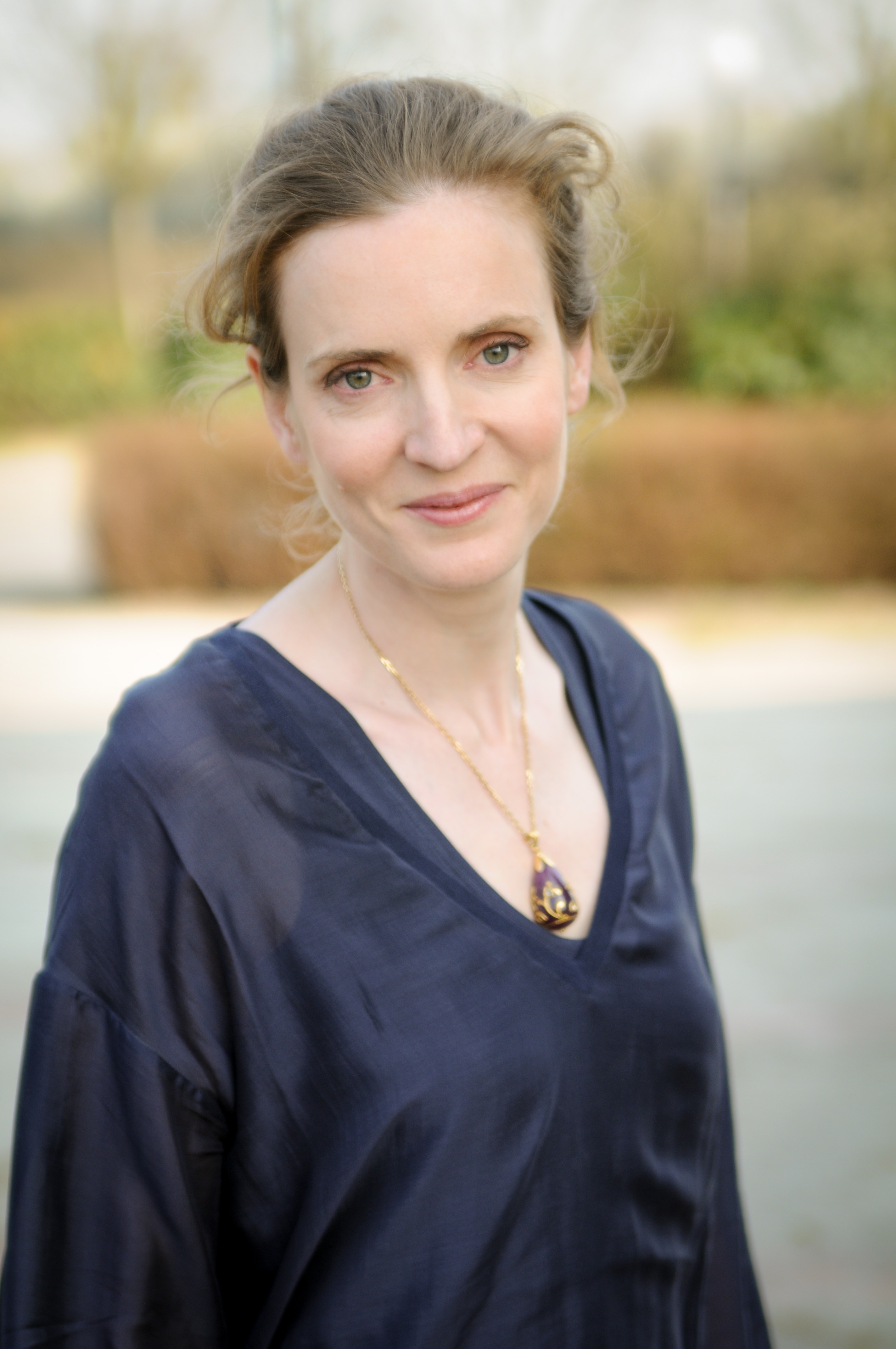
Nathalie Kosciusko-Morizet - a highly unconventional political rebel and my favourite French political personality

Nathalie Kosciusko-Morizet
If you were asked to to choose your favourite French political personality, which criteria would be the most deciding factor in your decision? The political opinions they defend? Their debating skills? Their high level of honesty? (No, scrub that, that criteria doesn't apply to politicians.) Their experience maybe?

Those are all valid criteria of course, but my main criteria is that the person must be a free electron with an eccentric side to their manner of doing politics which sets them apart from all the drab party-line following clones. And if there is one French political personality who fits that description to a tee it has to be right-of-centre UMP politician Nathalie Kosciusko-Morizet.

The first thing that stikes me about her is that she doesn't even look like a politician. Kosciusko-Morizet's vestimentary style is, well, ummm, not exactly coordinated, and it cannot be said that she is exactly the most beautiful of women in a classic sense either. She has often been referred to as being 'pale' or 'pasty' faced and it has often been remarked that she looks tired. Makeup isn't her strong point. She obviously spends little time on it. No complementary chic outfits of classy skirts and blouses of the sort that 99% of female politicians wear for her either, she tends towards a rather frumpy and old-fashioned look and wears what most people would consider to be bland and outdated outfits. Her hair is a permanent mess, generally tied carelessly back with what look like supermarket quality clips and bands which struggle against the odds to keep it in place. And it's not as if her hair doesn't deserve better because - and as can be seen in the rare photos of her in which she lets it down - she actually has the kind of hair that many women would be more than pleased to show off to the world if they could. But she looks as if she just got out of bed. She just doesn't seem to care about all that fashion stuff, and that is rare in politics today, where image is everything.

Nor does she behave like most other politicians. She swears a lot and - sin of all sins for a politician - is often to be seen smoking in the street, and she even smokes when she speaks to members of the public during meetings and other events. That's political suicide for most people, but not for her. On the contrary, people like her honest, frank and down-to-earth approach with the public. French political parties consist of several ideological clans, or factions, and being a member of one of them is considered to be an essential advantage for ambitious politicians who want to climb further up the party ladder and get noticed by party leadership and the press. Not so Kosciusko-Morizet. She is a member of no party clan. 'Worse' still, she is despised by some of them and has been involved in numerous spats with other party members. She is considered to be an outcast by many, and has a substantial number of political enemies within the UMP. But she doesn't care about all that either. After all, despite - or perhaps I should say precisely because of - her fierce intellectual and political independence, she was noticed early on in her career by Jacques Chirac, who promptly invited her to dinner. He subsequently helped her carer in many ways. Now that's what I call being different.

But is she an effective politician and has she reached a point where she is influential despite her rather singular and controversial character? The answer is yes on both counts. She became a deputy in 2002 at 29, which is very young by French standards, and was reelected in 2007 and 2012. She went on to become the Ecology State Secretary in 2007 before taking over the post of secretary of state with responsibility for Forward Planning, Assessment of Public Policies and Development of the Digital Economy in 2010. One year later she was appointed as Minister for Ecology, Sustainable Development, Transport and Housing under Nicolas Sarkozy, who would later make her his official spokesperson for his reelection campaign. 

How did she get that high up the ladder?  Kosciusko-Morizet is known for being a very hard, almost obsessive and obsessed worker, as illustrated by the following words, spoken by fellow UMP member Serge Dassault who was praising her work on transport and sustainable development issues during her time as Ecology minister;
"I just don't know how she does it. She works on everything at once - bridges, rail transport, ports, everything, and on top of that she [as a mayor] looks after her circumscription. She really is a formidable woman."
But that's not surprising given that another politician had said of her years earlier, when she was a mayor, that;
"She knows all about every single pothole in Longjumeau."
That said, perhaps - and, again, unlikely on the face of it - the principal reason for her success is her personality, which can vary between anything from charming to highly aggressive. She is said to be a highly patient, knowledgeable and persuasive politician when the mood takes her, which is why both Chirac and Sarkozy appreciated her and often invited her to discuss issues and listen to her point of view. But she is better known for her fierce will to do and say things as she sees them. This trait of character, particularly disliked in female politicians by their male counterparts, is what got her demoted as a minister on one occasion, and Sarkozy would often rage against her departures from the party line in speeches and parliamentary discourses.

What is she up to today? She is the official UMP candidate for the upcoming mayoral elections in Paris, a city with a tradition of electing socialist mayors, often by landslides. Her attempt to become mayor is thus theoretically doomed in advance. But, again, Kosciusko-Morizet surprises us. The latest voting intention polls give her a deficit of just a few points with respect to her opponent, socialist Annie Hidalgo, and the gap is closing. Who knows, maybe she will be elected? Here we have a politically unconventional operator, an isolated and insolent rebel who is under no-one's command, but she may just pull off what the UMP has been trying - and failing - to do for many years. If that isn't an exceptional situation in today's political world in France I don't know what is.

To sum up, all of this is why Nathalie Kosciusko-Morizet is my preferred political personality in France. She is dedicated to her work, she has genuinely honest relations and candid conversations with people she meets in the street, she sticks to her principles and she is - make no mistake about it - a canny and extremely talented politician.

And besides, who can possibly not like someone who, whilst smoking a cigarette in a public place, and after being advised by a nearby political communications and media advisor that smoking in public is perhaps not the best thing to do in terms of image, damningly and dismissively replies "tu vas arrêter de me casser les couilles ou quoi?!" Which, in plain English means;
"Are you going to stop breaking my balls or what?!"
That kind of straight talking is why Chirac, who appreciated her enormously, would affectionately refer to her as "the shit-stirrer." And he was absolutely right to do so.

Yup, no doubt about it, this lady has balls all right. She's a lone wolf, she's unfathomable, and my money says that she has not finished surprising us yet, not by a long chalk.

----------------------------------------------------------------

(This piece was inspired by a comment by Streaky on a post I published yesterday. Grateful thanks to him, her, or whatever it may be.)

Sunday, 2 June 2013

A major political party in one of the world's largest democracies says it's 'learning about democracy'. Jesus...

Copé with his 'studiously interested' look on
Meeaaanwhile, Jean-François Copé, President of France's main opposition party, the right-of-centre UMP, came out with a stupifying, almost surreal, statement today.

His party introduced a primary system a while back in an effort to modernise and get rid of the dreadful in-fighting which was characterising each internal election (not that the Socialists are any better mind).

The first primary came a few months back when they elected Copé as party president. It led to fierce rows in the UMP and accusations that Copé had cheated, and the atmosphere in the party is still poisoned today by that affair.

This weekend sees the UMP's second primary, in which they are to elect a candidate for the upcoming Paris mayoral election, and, once again, there are accusations of cheating being flung around by the candidates like confetti at a wedding. Awful spectacle.

Anyway, Copé did a TV interview this morning, during which he explained away the squabbles and allegations of cheating in his party by saying that
'We're learning about democracy. It's quite new to us.' 
So. Let me see if I've got this right. Here we have the edifying spectacle of the leader of a political party which hopes to be elected to run one of the worlds largest democratic countries after the next presidential elections blithely informing the French that they are LEARNING ABOUT DEMOCRACY' and that it's a NEW thing to them??!!

Decidedly...

Non mais putain, on est pas sortie de l'auberge c'est sûr....

Friday, 24 May 2013

Waiting for 'Godot', or the real reason why the French right cannot profit from Hollande's unpopularity

Logo of French right-of-centre party the UMP
Rocketing unemployment, serious economic problems, intense voter dissatisfaction, you name it, Hollande is having to deal with it. His popularity ratings are lower than those of any other president after one year in power, the national mood is deleterious, each day brings a new tax and each week sees a new government scandal.

In other words, this is a perfect opportunity for an opposition party to gain voter support by proposing alternative policies which seem credible. It's manna from heaven in political terms. Yet the UMP, France's main opposition party, has so far proved to be totally incapable of turning Hollande's considerable woes to their advantage. But why? That question is becoming urgent for the UMP because the longer they don't do something to improve the quality of their opposition the longer Hollande will be let off the hook.

There are several reasons for the right's ineffectiveness;

Kneejerk frontal opposition is an ineffective tactic.
The UMP's reaction to almost any government legislation or legislative proposal is one of indignant and full-frontal categoric denunciation, whereas they should be reacting by proposing sensible alternatives. But as the party has not yet put together a global alternative policy package due to the lack of an effective leadership structure (see below) there is nothing they can do. Meanwhile however, the public are becoming increasingly frustrated with the UMP's angry posturing and aggressive tactics in parliament.

The UMP is lurching to the right.
The UMP is currently locked in a bitter battle over the increasingly vocal and deliberately inflammatory support given to right-wing extremists by senior party members, some of whom are even demanding that citizens demonstrate en masse against not only the gay marriage bill, but also Hollande's economic policies. They also attend anti-gay demonstrations in the full knowledge that they will be disrupted by violent fascists and Catholic integrists. The result is that UMP députés and senior leaders are now to be seen during these demonstrations in the shoulder-rubbing company of prominent politicians from the extreme right-wing Front National. The public thinks it is shameful that democratically-elected politicians should chose to associate themselves with these obscurantist and reactionary elements and thereby tacitly endorse urban violence, right-wing extremism and high-risk demonstrations. Indeed, some party members have even ripped up their membership cards and left the party as a result of this spectacle. 

The interminable and damaging party leadership struggle.
UMP chairman Jean-François Copé is generally believed to have cheated - even by many UMP members - in the internal UMP elections which designated him as winner, and thus chairman. He is strongly suspected of having manipulated the results in order to beat his challenger - Prime minister under Sarkozy François Fillon. Since then the party has promised to hold new elections after summer, only to go back on its word with the more or less active agreement of both Copé and Fillon, who are both looking to be the next president of France. This state of affairs has not pleased half of the UMP's signed-up members and the general public feels that instead of squabbling between themselves and jockeying for position in view of becoming the UMP's presidential candidate in 2017 they should be addressing the country's current problems in a responsible manner. 

--------------- 

Meanwhile, a certain Nicolas Sarkozy is waiting in the wings and watching them destroy each other, and he is the real, the central, and the only reason why the UMP is a poor opposition party at the moment.

Nicolas Sarkozy.
In case anyone had forgotten, Nicolas Sarkozy is still around, and he is the main reason why the UMP - the party he created - is riven with dissent at this time. The party has never managed to get round to doing its mea culpa of the reasons why they did so badly in the last elections, and that is partly because Sarkozy is still looming over the party, like a brooding giant. More importantly, he is refusing for now to say whether or not he will re-enter politics at the head of the UMP (his election would be a mere formality) with a presidential bid in view. He has been following all the action and, not surprisingly from his point of view, his tactic is to let Fillon and Copé as well as other would-be presidential candidates slug it out, along with the supporting groups of each one within the UMP. After all, given that polls give him a slam-dunk victory were he to run for the Elysée in 2017 and that party members are sick of all the in-fighting, his return would result in joy and rapture throughout the party's rank-and-file and he knows it. Will he come back, and if so when? That question is the reason why the MP is currently paralysed and ineffective.

If Sarkozy did come back, it would be with a massive bang. He would galvanise the party and upset the applecart of French politics as no politian has ever done since De Gaulle. His return would change everything, and everyone, both on the left and right of French politics, knows it. No one would know how things would pan out and the country would be thrown into a frenzy. Hollande must be dreading the possibility of this happening.

The fact is that the UMP is on hold for the forseeable future. In other words, until Sarkozy makes his mind up. Opposition isn't their priority, but the shadow of Sarkozy, who is listening to their every word, is.

The UMP is Waiting for Godot.

 But shhhhh, don't say anything.

Friday, 7 December 2012

France and its political shenanigans 'à la république bananière'

François Fillon (L) and Jean-François Copé (R)
Call me a glutton for punishment if you will, but unlike the quasi-totality of people in France I am still fascinated by the ongoing political saga involving Fillon and Copé and their dispute over the UMP party presidential election which was won by Copé. Just to quickly bring you up to date with the essentials (I wrote a more detailed piece here) Fillon immediately declared that he wanted another election quickly because, he said, Copé had cheated because the Copé-controlled election commission charged with counting the votes forgot to include about 1000 votes from three god-forsaken island colonies somewhere which would have made him, Fillon, the winner, Copé refused to hold another election, so Fillon threatened to take the issue to the courts and the UMP then splintered into two parliamentary factions. The UMP had thus deliberately weakened their political clout as an opposition party, which was sacrificed on the pious altar of a personal spat.

Those events took us up to last week and Copé has been clinging on to power ever since, much to the disgust of the vast majority of UMP supporters and that of the population as a whole. The belligerants have been meeting regularly behind closed doors over the last few days. Nothing or nearly is filtering out and there are no flies on the wall. No progress has been made. Still, the growing rumour of the moment says that they are planning a sneaky deal which will suit them both but will not suit the party. In order words, we seem to be heading towards a cosy arrangement between two conniving cheats.

Today brings a bombshell however, and it may yet upset their dastardly plans. It transpires that the president of the election commission, Patrice Gélard, is pisse... not a happy bunny.

He has come clean to say that he doesn't understand why his staff didn't send him the vote tallies from the three overseas departments, and reminds us that the staff who compiled the figures were Copé supporters. He says he asked for these results twice and was fobbed off with a "no problem, because they are contained in the global figures for overseas territories." But they weren't....

The person who gave him that erroneous information also turned out to be a Copé supporter.

So the question now being asked is 'was this an innocent error during the vote-counting? Or was it a deliberate act of fraud? If so, it would be obvious to all that Copé and his merry band of mendacious minions were behind it.

Even more suspicious, he says, is the 'flash message' email sent in all urgency to party leaders just two days before the election. It decreed that the rules of the election were being changed and that checks to ensure that all voting party members were up to date on their party subscription fees and could thus vote were being scrapped for technical reasons. It is being said that this move suited Copé.

The problem with that message though is that it had Gélard's signature at the bottom, and Gélard says that he did not sign it. He says "I don't know anything about [the message]. That email has nothing to do with me. No, I didn't sign anything at all [on the day it was sent] because I wasn't in Paris, I was at Le Havre.

So who forged his signature? Nobody knows.

I mean, you couldn't make it up could you. This laughable excuse for a democratic political party is making a mockery not only of itself, but of French politics in general. The Socialists are just as undemocratic as these two UMP clowns in their internal dealings vis-à-vis their rank and file members, who are also ignored, and all this explains why, year after year, France is ranked very low indeed in international and OECD studies which assess the democratic quotient of political life in OECD countries.

My personal take on all this is that although France's democratic practices sometimes have more in common with banana republics in other parts of the world than they do with other, highly-developed, countries, this is just the way things work in France and always have done. Political corruption is relatively rife here but oh well, the country still muddles through one way or another.

Besides, I do love a good old soap story from time to time.....

Tuesday, 27 November 2012

Politicians: the machine-gun option

Photo credit Lionel Bonaventure for AFP
Having problems understanding the Byzantine UMP vote scandal which may damage the image of politics in France for years to come? Never fear, here's the issue explained in an easy-to-follow ten-step guide, why it happened, and what should be done about it.

So, and without taking sides;

1) French opposition party holds internal elections to elect party prez. Two candidates.
2) One candidate wins.
3) Losing candidate alleges vote-rigging and party election committee admits some votes were not counted.
4) Top-level neutral party inquiry successfully demanded by loser and respected senior member chairs it, asking party top brass not to get involved until inquiry presents findings.
5) Pro-winner top brass committee decides that winner won fairly. Winner refuses to cooperate with neutral inquiry. Inquiry chairman throws in the towel after just a couple of days.
6) Loser threatens court action to challenge results. Party scared of possibility of law investigating illegal methods and sticking its nose into politics.
7) Party mentor Sarkozy advises against legal action, suggests compromise via for/against new election referendum for party members.
8) Loser announces will form a seccessionist party which will split party into two, reduce party taxpayer funding by half and render opposition totally ineffective.
8) Both protagonists finally decide to move towards Sarkozy compromise using guarded language.
9) More developments tommorow.
10) French public totally disgusted by whole farce, which will continue for months to come, whatever happens.

Those are the facts.

Why did this happen and what should be done about it? I'll leave you with the words of another Blogger blogger (sounds daft that..) who answered those questions in a comment thread in a perfectly simple and succinct manner with which I wholeheartedly agree;
I've often I've longed for a machine gun when watching politicians of all parties mouthing off about the daily life and frustrations of their constituents. Situations they clearly know very little about.
There you go, simple as that. These jokers couldn't care less about anything else but their vain little internecine power struggles and lining their pockets. 'The People'? You've got to be kidding.

I'm off to my local machine-gun shop to see what's on offer......

Saturday, 24 November 2012

Copé and Fillon get a severe dressing down from a VERY angry journalist

Photo credit Lionel Bonaventure for AFP
Have you ever heard of Olivier Mazerolle? No? That's not surprising because until a couple of days ago he was a relatively anonymous political journalist at the French TV rolling news station BFMTV. They have modeled their presentation on Anglophone stations such as BBC World or CNN, although they are hardly known outside France.

Anyway, there he was live on BFMTV with a couple of other journalists recently and they were discussing - what else - the vaudeville political farce which is the aftermath of the UMP's election designed to designate a new party president. Copé and Fillon have accused each other via a viewer-hungry media of cheating, vote-rigging and everything else short of eating babies.

The whole country is sick of it and nobody understands all the underhand shenanigans which underpin this fight to the death, although they know full well that it's a total disgrace and a disaster for the already appalling image of French politics both at home and abroad.

Mazerolle has also had it up to here, and that explains his sudden and blistering attack on both belligerents, some of which I have translated below.


"Let's stop mucking about shall we. There's a major political problem. Nobody understands anything about that (UMP) party and nobody trusts anyone else in that party. So there's a man who says 'me I'm a former UMP General Secretary, I'm a former UMP president, I'm a former PM and I want everyoine to agree but only on the condition that you let me get on with the job and I have sufficient authority and I won't let myself be manipulated' he says. That's it, that's how it is now. Ok, right. Stop it! No I mean it, put a sock in it! Because I'm fed up to the back teeth of all this two-bit cheap French politics! I'm a journalist too and I'm tired of it all just like anybody else and I'm sick and tired of being obliged to report on all this nonsense and that's all there is to it."
Right on the button! I have often been highly critical of the French press' tendancy to kow-tow to politicians but BFMTV isn't too bad because it is much less dependent on state aid than are the state-controlled major TV stations and the big three newspapers.

So put yer' mitts together and let's have a big round of applause for the only person who has said anything worth listening to about the Copé-Fillon fight. How about if we flew them both to Corsica where we wouldn't have to listen to them any more and while we're about it - and to please Corsican independentists - we could then cut the mooring ropes and allow Corsica and its politically-toxic cargo to drift out into a Mediterranean sunset. Good riddance to bad rubbish I say...

Monday, 19 November 2012

The real winners and losers of the farcical Copé-Fillon UMP leadership elections

Photo credit Lionel Bonaventure for AFP
The UMP's Jean-François Copé and François Fillon remind me of two drunken clowns running around a minefield, and as any child will tell you drunken clowns who run around minefields invariably end up stepping on a mine and blowing themselves to smithereens.

France is fond of proclaiming 'the French exception' when it comes to protecting its interests, and that maxim certainly applies here because the current and still-undecided battle for the leadership of the UMP is, well, as exceptional as it gets. This ongoing farce of an election saw both Copé and Fillon declare themselves as having won late last night as vote-counting began to draw to a close after yesterday's vote by party members.

Once rumours began to circulate of possible vote-rigging however, they instantly changed their tune and began to accuse each other of fraud and ballot-stuffing. A depressed and weary France finally went to bed at about 3am with the announcement that no winner would be declared until today and that the vote had been so close that enquiries would have to be made into the allegations.

As I write this it is becoming clear that the results will not be known before late this evening at the earliest. Accusations of cheating have to be investigated, recounts will be needed in many places and confusion reigns. But the result, whatever it is, will prove to be totally irrelevant.

The press, the public and members of all political parties including the UMP are sickened by this spectacle. The Nouvelobs did a tour of the regional papers and found epithets such as 'grotesque', 'pitiful', 'surreal' 'theatrical', 'fratricidal' and the heavily ironic 'politics in all its splendour' to describe this amateurish imbroglio. The French word 'politique', which already has a highly negative image here, will surely be classified as a filthy swear word when this is all (thankfully) over.

However, the world being as it is there's always one idiot who puts his foot in it and cuts dinner conversation dead by asking his host how his gran is only to be sharply reminded that, as he had been informed last week, poor old granny fell under a bus the week before and is thus now in a non-ongoing existing situation.

The self-designated nitwit this time was hapless and one-time-short-lived-stopgap-expendable Prime minister Jean-Pierre Raffarin who came out with the totally inept and inaccurate assertion that all closely-fought elections lead to problems before going on to quote the Bush-Gore election as being an example. He had obviously forgotten (wasn't aware?) that whereas Bush-Gore was an election pitting two political parties against each other, the UMP débacle has been manufactured in-house. Also, you can bet your beret that, unlike for Bush and Gore, neither Fillon nor Copé will graciously accept defeat.

And therein may lie their future downfall. These primaries - the UMP's first - remind everyone here of the unseemly bitchfest between rival candidates Ségolène Royal and Martine Aubry after voting ended at the Socialist primaries in 2008. They accused each other of cheating and fraud and Royal and her lieutenant Manual Valls even announced that they would open legal proceedings to challenge the legality of the procedure. They finally stopped short of doing so however and the result was that although Aubry was eventually declared the winner, neither she nor Royal was designated as presidential candidate or candidate for party leader this year, and both have since slipped off the radar.

Both Copé and Fillon have lost pocketfuls of Brownie points since yesterday and whoever wins this fight will be faced off against the other in an ugly and party-splitting battle which will render the UMP even less efficient as an opposition party then they are already. As a result it is by no means certain that either will be endorsed as the 2017 UMP presidential candidate, and to understand why let's go back to the minefield analogy.

Their suicidal antics have been contemplated with hand-rubbing glee by their enemies, who have been standing on the sidelines and are taking great delight in watching them do a passable imitation of clumsy suicide bombers who blow themselves up without killing their intended victims. Their enemies shall thus live on to fight another day from an ever stronger position. Who are they?

The most obvious beneficiaries are François Hollande and his government. Their reaction has been wisely discreet up until now, given that the result is still uncertain, but they know that from now on they will be faced with a divided and weakened opposition which will have no more lessons to give in the future about the executive's right hand not knowing what its left hand is doing. The Front National on the other hand has lost no time in ridiculising this excuse for a democratic internal election and have every reason to be optimistic about picking up disgruntled right-of-centre UMP votes in future elections.

But the prize for the biggest cheshire-cat grin on the block goes to Nicolas Sarkozy, the man for whom the UMP was created. He hasn't said a single word about this disaster yet, but it can be safely assumed that his shadenfreude knows no bounds and that there there is sure to be a major uptick in the number of impassioned appeals by UMP politicians and rank-and-file party members for him to return as the Messiah who shall save the UMP from being banished to the political wilderness.

All of this however supposes that the UMP will survive this crisis. But both Fillon and Copé are already being exhorted to form their own parties if they lose, and that would weaken each of them even further in terms of electoral appeal.

The Socialists, the Front National and Nicolas Sarkozy haven't had to fire a single shot yet they have still won a major victory. All three are delighted with the disastrous picture these primaries have painted of the UMP as a credible opposition party and their victory is already total after watching Fillon and Copé condemn themselves to a hellish future, whoever is declared to have won this lamentable and irrelevant primary 'election.'

Monday, 17 September 2012

The Sarkozy comeback: not if it will happen, but when?

"Shall I kill myself politically?" "NOOO!!" screamed his adoring fans
They began as wishful thinking by disappointed political allies of Nicolas Sarkozy after his defeat before slowly and cautiously creeping into the the inside pages of the press, but there can be no doubt left today that the rumours which began three months ago have now turned into a plausible scenario - that in which Sarkozy returns to politics to lead the French right into battle at the next presidential election.

Nicolas Sarkozy's defeat at the hands of François Hollande coupled with his decision to abandon politics led to much anguished hand-wringing within the ranks of the UMP, and a couple of opportunists even expressed their pleasure at his departure before declaring themselves as early candidates for the UMP's upcoming leadership battle on a platform along the lines of 'I'll put right what Sarkozy got wrong.'

Sarkozy's name was barely mentioned for a while unless it was used to express a desire to move on from the Sarkozy era, but his former Chief of Staff Claude Guéant, faithful as ever to his boss' cause, soon began to float the idea of a possible return. He was followed by several others, including - and oddly enough given that he was a fierce opponent of Sarkozy during his presidency - Dominique de Villepin. He declared on French TV in August that he believed Sarkozy would be back, adding that "Today, both the right and the left are writing a plausible and absolutely extraordinary scenario for him which is just incredible. The French are very fond of these situations."

Indeed they are, and it is perhaps this penchant for unlikely comebacks and underdog situations that could lead them to consider voting for Sarkozy in a few years, because there is now a lot of circumstantial and real evidence that although he is staying away from active politics at the moment his troops have placed him at the centre of the party's affairs.

My first-coffee-of-the-day tour of French news sites this morning turned up some interesting poll results which reveal that 44% of those polled think that presidential action would have been better if Nicolas Sarkozy had been elected, with only 26% supporting the work of François Hollande. This poll is one of several which ask the same kind of questions and come up with the same answers, and they show without a doubt that there is still a lot of public support for Sarkozy.

Discussion of the rumours of a Sarkozy resurrection are now an everyday occurence in the French press, and much of it is centred upon whether or not he is somehow pulling the strings behind the scenes of the current UMP leadership battle being fought between favourites François Fillon and Jean-François Copé, both of whom are faithful Sarkozysts. There is no proof of his implication but there is no doubt either that he is now an omnipresent factor in the fight to win the UMP's presidency, which will be decided on November 18, and several of the early candidates explained their retirement from the race by saying that they were doing so to help Sarkozy by leaving two of his most influential supporters to fight it out.

It is telling too that neither candidate is campaigning on a platform to take the party away from Sarkozy's policies. On the contrary, both of them make almost daily declarations of faith to Sarkozy in order to please the many Sarkozysts within the voting militants' ranks, and UMP heavyweight Christian Estrosi recently announced his backing for Fillon whilst at the same time declaring that Sarkozy is still the "natural leader" of the UMP and that if a presidential election were to be held now Sarkozy would win it.

Guéant agrees with this of course, and he told reporters on Sunday that Sarkozy could represent a good option for France. He went on to say that if Sarkozy were to become the UMP's presidential candidate he would have to be elected as party leader too and he even exhorted him to contest November's election, although he left the door wide open for him to refuse by pointedly adding that the vote in November was not about electing a presidential candidate.

But perhaps the most pointed and obvious clue to date as to how UMP members are thinking came today from Nadine Morano, who was Sarkozy's Minister for Apprenticeship and Professional Formation. She has declared that she will support Copé in November because "...he has publicly asserted that if Nicolas Sarkozy decided to get back into politics he would support him." The message couldn't be more clear, particularly as she added that it was by no means certain that the next leader of the UMP would be its presidential candidate.

And what does Sarkozy himself have to say about all this? The answer, of course, is nothing. He cannot be seen to be actively influencing the vote, but his silence on the many stories concerning his possible return are a clear sign that he is not denying them in order to keep those within the UMP who may criticise him in check from a distance via their fear of reprisals should he return.

He is also aware that none of this speculation is good news for François Hollande or his government. He had the lowest poll ratings of any president in the 5th Republic after three months in office, and the French are becoming increasingly impatient with what they see as his lack of action, notably on the economy. Unemployment has hit 3 million for the first ever time and there are several major layoffs in the pipeline in major industries and companies. This means that he is hardly in a position, so far, to be able to dismiss the possibility of the eventual return of Sarkozy with an absent wave of the hand by citing progress made under himself, of which there has as yet been precious little.

Despite his physical absence from political life, it is as if Sarkozy never left politics in the first place. Almost all of his former ministers have openly backed him recently, the future party leader may turn out to be no more than a caretaker, and he is being openly touted as a future presidential option after being out of office for only a few months. If Sarkozy has in fact secretly decided to make a political comeback, and as Valentin Spitz put it for Nouvelobs, "..he knows that the most urgent thing to do is wait in order to allow Fillon and Copé to rip each other to pieces and Hollande to mess things up."

Nicolas Sarkozy once said that his decision to run for president in 2007 (and win) was taken while he was taking a shave two years earlier, and although there are relatively few recent photos of him my money says that he is still shaving.....