Showing posts with label sport. Show all posts

Sunday, 19 May 2013

The Monaco-France football tax spat mirrors France's dilemma for the future

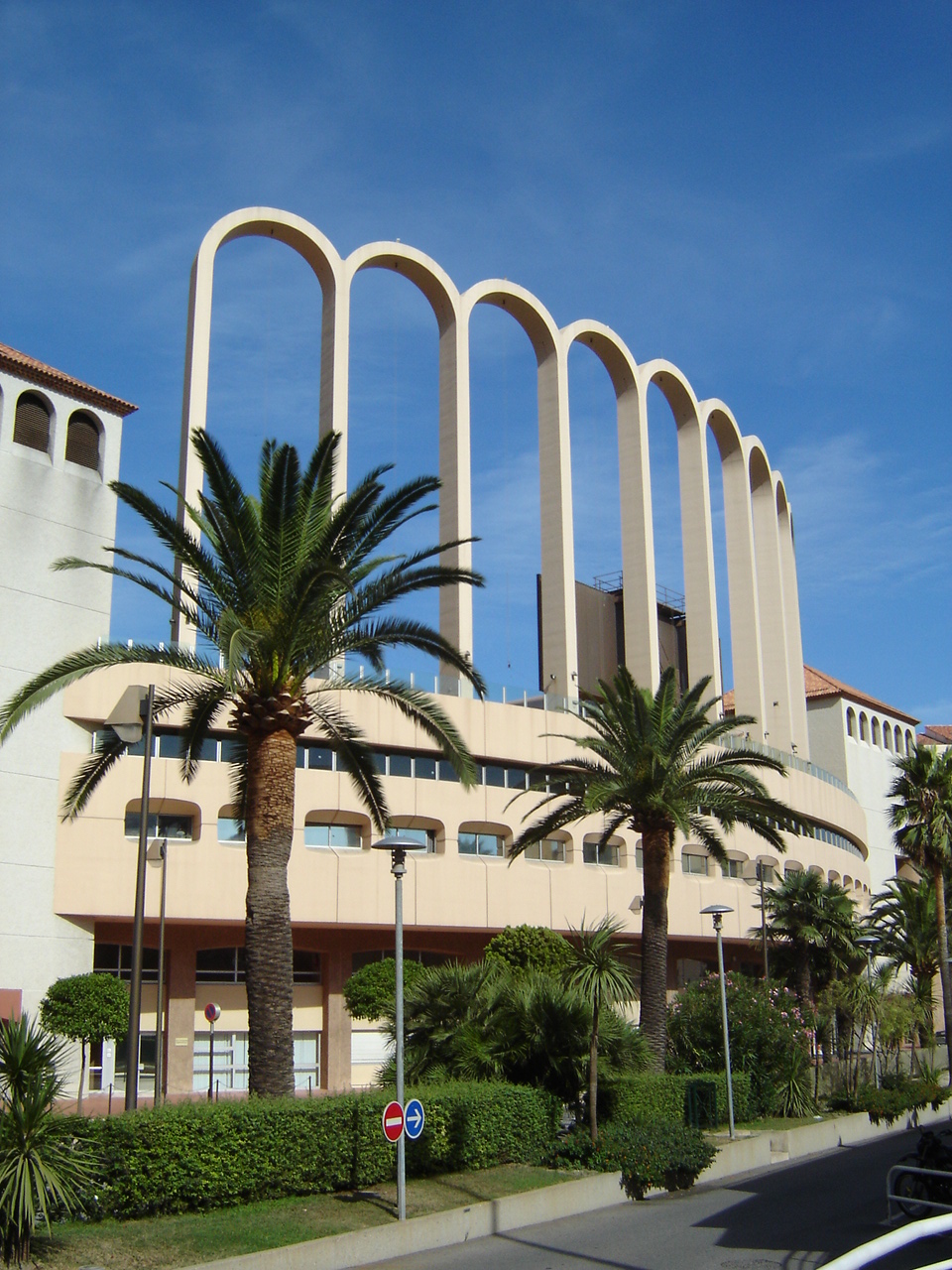
Monaco football club stadium
Sport often mirrors society in general and it is doing so again in the form of AS Monaco football club's tax spat with French football authorities. The club, which has been playing in the French league for almost 100 years, is taking legal action against them in the French State Council because of a long-running battle over the principality's status as a tax haven, which allows them to attract world-class players and management with the offer of tax-free salaries. The decision to do so was taken after other French league clubs threatened to block the club's entry to the country's Premier League next year, and the French Football Association made matters worse by suggesting that Monaco pay €200 million in tax and move their headquarters to France to be able to continue playing in France. That was the straw that broke the camel's back as far as Monaco were concerned.

Monaco says that these moves breach European law and that they break a 50-year-old tax convention between France and Monaco, and the French say that the current status quo gives Monaco an unfair advantage.

There are grounds for these French fears of course. The French government under François Hollande has slapped substantial taxes on club profits and players' salaries, and this is sure to lead to an exodus of some of the league's better players to more generous clubs in countries such as Britain, Spain, Germany and Italy. Monaco does not have these problems however, because the club is now overseen by Dmitry Rybolovlev, a Russian billionaire who has big spending ambitions and has recently shown an interest in a long list of top players and managers in other countries.

The result of this is that AS Monaco is one of just two clubs in France with major buying power and big European ambitions, the other being Qatari-backed Paris Saint-Germain, the club which managed to lure David Beckham to finish his career with them. PSG unsurprisingly won the French championship with the help of several major signings, and the fear of all the other cash-strapped clubs is that French football shall be no more than a two-horse race next season.

That's how things stand, so be it, but all this begs a much wider question, that of how Hollande and his government can possibly reconcile their current economic policies with success in a country where 'business' and 'money' are dirty words. France has taxed business and the rich very hard since Hollande came to power, there have been threats to nationalise companies, and many prominent (and rich) personalities have left the country for tax reasons. The same goes for some companies and for senior highly-paid personnel, who have been relocated abroad. The result is that foreign investors are wary and that business confidence is at an all-time low.

The France-Monaco row has shone a harsh and analogous spotlight of reality on some crucial choices facing France. If French industry and foreign businesses in France are to invest in order to grow and succeed in international markets they need to be given the chance to do so instead of being trussed up in a fiscal straightjacket, and the same goes for its football clubs, which are of a lower standard than their European counterparts. If they are to be successful and attract investment and the public they too need more help, not hindrance.

This episode shows that if France and its people, like its football clubs, want to remain competitive and be successful, the country will have to change its way of doing things. The alternative, of course, is to accept the country's decline.

Ultimately, France and French football will be forced to choose, because the country can't continue to have its cake and eat it. Either France wants to succeed in a world which is much bigger than it is and which imposes its rules, or it doesn't.

In which case it shall be obliged to resign itself to ever-increasing mediocrity both on, and off, the football pitch.

Wednesday, 6 February 2013

Garlic-Eating Frogs vs Beer-Swilling Teutonics - live match report

A man with, euhhh, two balls. As they say.
France plays host to Germany this evening for a friendly international football match so seeing as I'll be watching it and all the papers are doing a live rolling report on it I thought I'd do the same, except that mine will be a parody. A spoof. As unserious and irreverent as it gets. Why? Just for the fun of it and in the hope that someone may find something amusing to read in it. I'll be updating it every 5 minutes or so. Enjoy!
---------------------

Preamble
This is the bit before the match kicks off where football commentators usually tell readers who they think will win, and why, and why the match is so "vitally important". But seeing as I have no idea who will win, or why, and because I couldn't care less anyway, I'll just skip this chore if nobody minds.

Team News
France - Lloris - Sagna, Koscielny, Sakho, Evra - Cabaye, Matuidi - Sissoko, Valbuena, Ribéry – Benzema.
Germany - Adler - Howedes, Hummels, Mertesacker, Lahm - Gundogan, Khedira - Müller, Özil, Podolski - Gomez.

Well, all I can say about that is that they have 11 players each it would appear, so no there's no cheating, at least just yet. The cheating part comes when the match starts.

The teams are about come out onto the pitch!!
Football commentators often say this so I'll say it too, although I personally think that Hitchcock was a better master of keeping up expectative suspense and rising tension.

Peeeep! And we're off!

2 mins. I see 22 people running round a field after a sort of ball-thingy. The French are dressed in their familiar blue shirts, and the Germans are in their usual in white. If this was a fashion show the Germans would win 10-0. Blue is sooooo passé dahlink...

4mins and nothing much is happening. So little in fact, that I have enough time to notice a man in a rather spiffing and fetching yellow shirt on the field. It appears that he is what is called the 'referee'. Whatever floats his boat. I happen not to be gay though so I'll leave him to the ladies.


12 mins. It's still 0-0 and I'm wondering if there's any such thing as 'catatonic boredom'. Oh sod this, I'm off to watch a Youtube video. Their singer died recently. They were a great band and those were the days. Back in a few.


18 mins. 0-0. No, football is a really exciting game. Really it is. Believe me. *sigh* :(

24 mins. French striker Benzema carves the German attack apart with more ruthless efficiency than a butcher's knife slicing through milk. It would have been easier to score but he decided to make things difficult for himself by shooting straight at the goalkeeper.

29 mins. The match has suddenly come to life, like the Zombies in the film. End-to-end stuff it is and it's quite attractive to watch. Either side could have scored in the last 5 minutes. A goal soon please!!!

35 mins. Ribery is all over the place, like white on rice. And he's dangerous too. If he doesn't score tonight I'll sell my grandmother be very surprised.

40 mins, and the French have the upper hand. They seem in a hurry to score before half-time. But the Germans are displaying their usual discipline and are managing to cope in the hope of holding out.

44 mins and France 1 Germany 0! This was inevitable and it was thnks to Valbuena, who has worked hard since the kick-off. More power to him.

46 mins. Half-Time.

Half-time entertainment

France arguably deserves to be a goal up, although I'm sure that the Germans will come out all guns blazing in the second half. But that won't work unless they manage to capitalise on their patient attacking build-ups by creating more chances. Oh, and talking about advertisements, anyone for a beer?


45 mins. Off we go again and the French get a corner within 20 seconds. As usual, it leads to nothing. In fact despite the fact that they are supposed to be an advantage to the attacking side corner kicks result in so few goals that I'm thinking of campaigning for their abolition. Yours, Angry From Suburbia.

51 mins et oh la la! France 1 Germany 1! A terrible pass from Capoue is intercepted and relayed to Muller, who duly slams it into the net and sends chocolates and thank you tweets to the French defence to thank them for their generosity.

60 mins. This match is up for grabs and I'd rather take a cold shower than bet on the result.

65 mins. Valbuena, then Ribery, the French seem to be taking it in turns to put shots just wide of the posts. They've been bribed by the Albanian mafia to lose the match I tell thee!

74 mins France 1 Germany 2. What a sumptous sliderule pass from Odil to Khedira! It was the kind of pass that's so clever that it solves complex crosswords in a millisecond. Khedira responded in kind with cool nerve and a fine finish.

80 mins. Just 10 minutes to go and the French introduce an attacking substitute in an attempt to create an equaliser. It's followed by another, similar, substitution. Desperate times indeed, but hope springs eternal as they say.

85 mins, and the Germans are holding on to the ball. If the French are going to score they'll have to regain posession, and that's easier said than done against a team which knows how to pull down the shutters and kill the game.

89 mins and France equalises! 2-2 with one minute to go!! Nah, only joking. Giroud was offside and the goal is disallowed. Merde alors! There'll be three minutes of added time.

93 mins. Peeeeep, and it's all over. France 1 Germany 2 and all this goes to prove that drinking beer is better for footballers than eating garlic. Or something. Thanks for reading and have a good evening..

Saturday, 3 November 2012

"Sport is the apprenticeship of fascism"

Gestapo headqua...euhh, a French school
I suppose I'd rather read that than be blind but those are the most depressing words I have read for weeks. They were spoken by a young woman who was describing her schooling, they and other, similar, opinions are from this article in online French daily Rue89, and they are symptomatic of the massive failure of the archaic self-contradictions of the French education system.

"For me, the word 'shame' is synonymous with the swimming pool." "I couldn't give a damn about sport. I thought it was stupid." "They didn't let me play rugby because I was too useless." "The sordid universe of the changing rooms at 8 in the morning."

That is the tragic reality of how the majority of French kids see sport, but it isn't the kids' fault in any way. There are always going to be some children who do not like sport of course, but the generalised loathing it inspires today is extremely worrying because it is the direct reflection of shortcomings in the way French schools are run and, on a broader scale, the pressures that society places on children.

The grand paradox of the French educational system in modern times is that it is still rooted in outdated philosophical approaches and methods of thought which were abandoned many years ago in more progressive countries. The great irony is that the teaching profession here is majoritarily left-leaning, which means that egalitarianism is theoretically espoused and the very idea of competition is an anathema, yet in practice the system is solidly structured around the very principles of soulless abnegation, the fear of failure and achievement-at-all-costs which the profession ostensibly despises. The word 'capitalism' was banned from French school books for many years because it was thought to embody a dog-eat-dog philosophy, yet at the same time teachers would (and still do) spend half their time establishing hierarchies amongst their pupils via the daily use of grades, marks out of 20, and the humiliation of those who are not 'up to standard.'

Probably the most used and abused word in French schools is 'nul' - 'useless.' 'You're useless' is thrown around like confetti by exasperated teachers who use it as a form of discipline and punishment. Children are deliberately ridiculised in front of their classmates by teachers who somehow manage to delude themselves that it will inspire them to perform better. But it doesn't, and they don't. French children are taught to keep quiet, they do not have the right to express themselves or their individuality (in the name of 'equality' maybe?) the professor is God, and woe betide any child who dares to question what he or she is being told.

And so it is with sport. Largely frowned upon by a profession which considers that it promotes unhealthily competitive must-win attitudes, it is at the same time organised in a highly competitive manner. Children are given marks for their performances, these marks count towards end-of-year results, and coming last is often seen as a sign that the child is lazy.What happens if you don't get the desired grades at the end of the year? You have to do that year again, which means your classmates move onwards and upwards while you have to stay behind and study with children a year younger than yourself. The feeling of humiliation and failure that this almost always leads to can easily be imagined. It is well-documented moreover.

It is this fundamental hypocrisy which has led to the rise of a €2 billion a year legal market for coffee tablets and other stimulants to help children keep up with the frantic pace of homework, tests, exams and studies. Depression due to the pressures of school life is rife amongst French schoolchildren, many of whom go to school with a heavy heart.

And it's not as if the pressure and hierarchical approach gets results. Contrary to what many foreigners may think or believe, the French education system and the results it obtains are regularly criticised by OECD and E.U. studies and France is either in or just above the bottom third of results obtained in crucial subjects such as French and maths. Creativity is almost non-existant and both teacher and pupil absenteeism are abnormally high.

All that said, it's not just the education system which needs a shake-up, it's society's expectations of children. They learn early on that if your breasts are too large - or too small - or if you are overweight, in other words if you don't look like the skinny models used to sell clothes in childrens' magazines you are just one notch away from being considered as a freak.

You may say that things have always been like that and you would be right, but the onus placed on French children today to succeed is far greater than anything experienced in the past, and failure, unlike before when you could, say, get an apprenticeship or lower your sights, often means long-term unemployment in a country where unemployment rates for young people are higher than in almost any other major western country except Spain.

Some children are more competitive in nature than others. There is nothing wrong with that of course, but sport, like any discipline, should not just be about winning and getting good marks. Sport should be about doing one's best and trying to improve, whatever one's level of ability. It should be about fun and cameraderie and children should be encouraged and praised, whatever the results obtained.

That's how it was for me and for me to see the very idea of sport and intellectual endeavour reduced to the point where it's only the grades which count is a damning indictment of our times. If we can no longer teach children how to play sport without it being a source of pressure, dread and depression the teaching profession and society in general are guilty of depriving children of their basic rights.

Friday, 24 August 2012

Armstrong's decision means it's make or break time for the Tour and professional cycling

Nice bike, shame about the drugs?
So that's that then. After years of guerilla warfare against those organisations and individuals who have accused him of doping his way to seven Tour de France wins Lance Armstrong has finally thrown in the towel and decided not to contest the doping charges laid against him. His decision is tantamount to an admission that he is a 'drug cheat' according to the majority of the public as well as those in the cycling world, and he is to be stripped of all 7 of his Tour titles and banned from competitive cycling.

So much for Armstrong's fate, but what of that of the Tour and professional cycling in general? After all, Armstrong has just single-handedly annihilated seven years of Tour history. They no longer exist because there is no credible winner to any of them. Armstrong's name will be erased from the records but it's not as if the man who came second each year can credibly inherit the title either.

Alex Zülle was second in 1999 but he had already been involved in a doping scandal and Jan Ullrich's second places in 2000, 2001 and 3003 would be worth nothing to him either as he was involved in more doping scandals than amost any other cyclist. Joseba Beloki, second in 2002? The answer is no again as he too was involved in a doping scandal. It's the same story for Andreas Klöden (2004) and Ivan Basso (2005.) And it's no use looking to those placed third either because many of them were involved in doping too.

In other words, it appears that all those long afternoons and hundreds of hours I spent drinking bottles of Heineken and eating peanuts whilst watching each and every one of Armstrong's wins were for nothing as those Tours have to all intents and purposes disappeared from the Tour's official records. And it's not as if Armstrong was the only winner to have had his title(s) taken away from him in recent Tour history. Floyd Landis won in 2006 but he was found guilty of doping soon afterwards and thus lost his title, and Alberto Contador lost his 2010 title for doping too. Dozens of other runners have also been found guilty of doping in the 2000s.

The implications for the future are of course serious, but they are even more serious if one takes into account the century-long history of doping in cyclism and the failure of most of the efforts which have been deployed to combat it. The Seventies and Eighties saw the ascension of cortisones and amphetamines, the Nineties were characterised by EPO, and subsequent years saw the rise and rise of sophisticated blood transfusions.

Many of those found to have illegal substances in their bodies invented and successfully submitted some ludicrous explanations to explain how they came to have ingested these substances, including spiked drinks at parties, impure food and many others. But the grand master was surely Armstrong, who used an armada of lawyers to defend himself, and this partially explains why he was never caught red-handed or successfully charged with doping even though, with well over 500 drug tests, he is the most dope-tested man in sporting history.

The Armstrong affair may be the straw which broke the camel's back and the Tour is now faced with some daunting and pressing issues to resolve. The cycling world is very much aware of that moreover, as the muted and carefully-worded comments of both cyclists and staffers shows. Doping is obviously the most important issue of all and the sport is going to have to be seen to crack down on cheats as of now if it is to live. There will also have to be a complete overhaul of the testing system in order to prevent a repeat of the connivance of testing bodies with riders, teams and others during the days of EPO in order to cover up doping scandals. And there is also a need for more proactive research and investigation to be able to predict which drugs and techniques for taking them are in the pipeline.

'Living', for the Tour de France, means having the fans on its side, but their patience is now wearing thin, and it also means having sponsors. There is sure to be a backlash from both existing and potential sponsors, whose money is the lifeblood of cycling, and the Tour is going to have its work cut out to persuade them that investing in it is not going to cost them their reputations. The opening shot in the sponsors' backlash has already been fired in fact, with Le Figaro reporting that Armstrong sponsors such as RadioShack, Nike, Coca-Cola and Subaru are considering a bid to force Armstrong to pay back the money they poured into his efforts. This has deep implications for the future because sponsors may include even more pay-back-in-case-of-cheating clauses into riders' and teams' contracts than they do already. But this could be a boon for the sport because it may make some runners think twice before doping.

Then there's TV. The Tour gets massive amounts of revenue from national TV stations all over the world but how long are they and their viewers prepared to put up with investing substantial amounts of taxpayers' money into Tour coverage given that of the 14 Tours that have been covered since the end of the Nineties, nine, yes, nine, of them have produced winners who were stripped of their titles. It is high time that TV began to give priority to sporting ethics, morals and taxpayers' interests instead of being happy to close its eyes to the abuse and rake in advertising profit. TV channels should start insisting on seeing real progress in the war against doping by using a refusal to cover the Tour as the stick. This would represent a crucial step towards reducing doping were it to happen and it would be in TV's own best interests in the long run.

All of these questions must be tackled urgently and doing so is going to take courage, not a little humble pie, a lot of self-questioning and even more resolve. It's a massive undertaking, it won't be easy, and there will be glitches along the way. But it must be done and the effort must start now and be seen to start now.

Because if it isn't, and if next year's Tour de France produces yet more dope-using riders on the podium and the usual slew of exclusions, the public, sponsors, national TV (certainly in France) and all those who have supported and been patient with cycling for so long may finally call it a day and start turning off the money taps, condemning the Tour de France and professional cycling in general to slowly wither away into relative obscurity......