 |
| Autre temps, autres moeurs ? |
That blog entry expressed my view that the judgement would serve as a warning to extremist secular zealots that people's private lives are not the state's business, but it was not to be. Floods of protest followed the judge's ruling, with politicians from all parties, from the extreme left to the extreme right, leading the charge."France is a country in which the state already pokes its nose into people's lives far more than is the case compared to what happens in other Western countries, but if private organisations in France were ever forced to bow to state-inspired ideology it would only be a matter of time before this ideology were imposed upon citizens in their own homes."
No sooner had the decision been announced,
Interior minister Manuel Valls took the stand in parliament to say "how much I regret the court's decision". His thoughts were echoed by other socialists, including the President of the Socialist Party's parliamentary group, and député Jérôme Guedj, who said that "court decisions must be respected, but maybe that means that we should consider the question of adapting our legislation to all situations, and preserve and sanctuarise laïcité". His words were echoed by other socialists. The opposition UMP party agreed, and UMP député Eric Ciotti announced that he would shortly be submitting a law proposal to parliament "in order to permit the necessary respect of neutrality and laïcité in private companies". Next, extreme right wing party the Front National agreed, with Vice-president Florian Philippot denouncing what he said was a "highly dangerous" decision, and extreme left wing parties followed the same reasoning.
All those words were spoken within a few hours of the court's decision, but since then there have been many other calls for strict laïcité laws to be applied to the private sector, via legislative means. The government, smelling the coffee, has already leaked the news that it intends to change the law.
The press has also been largely critical of the judge's decision to uphold individual freedoms, with this piece being an example.
But what does the average Frenchman or woman think of all this? We haven't had to wait long to find out. Poll results issued today show that a crushing majority of citizens - 84% - would like to see Muslim headscarves banned in any workplace to which the public may have access. This includes shops, restaurants, business consultancies, insurance and other related companies, and many more.
This has frightening implications. There are many thousands of Muslim-run businesses in France, and many of them are wholly or partially staffed by people who wear a Muslim headscarf. Are they to be banned from doing so? And what about mosques, which are also public places? Shall non-muslim visitors be authorised by law to visit them without head coverings and shall Muslim clerics be obliged not only to accept these visitors but also to forego their own religious insignia? There are hundreds of thousands of Muslims, maybe many more, who go to work each day wearing religious insignia, and if the law is changed shall they no longer be able to?
You will have noticed that what is being objected to here is not religious insignia in general, but Muslim insignia only. And this is another cause for serious worry.
It has been well documented that racism in general in France is rising, with an increase in racist incidents of 23% in 2012. That is bad enough in itself but if you scratch at the surface of the figures the real target of the average Frenchman is the Muslim community. This is borne out by the fact that 74% of French citizens consider Islam to be an "intolerant" religion which is incompatible with French values. Also, only a minority considers that "integrists" represent only a tiny minority of Muslims, and a majority would even like to see the Muslim headscarf banned in public.
So it's no wonder that the French government feels that it will not encounter much opposition to its plans to extend laïcité to the private sector. After all, it has the solid backing of the opposition, the press, and the public for stricter laws.
The sad and disturbing fact is that French society is running headlong towards the rejection of foreigners in general, and those of Muslim origin in particular.
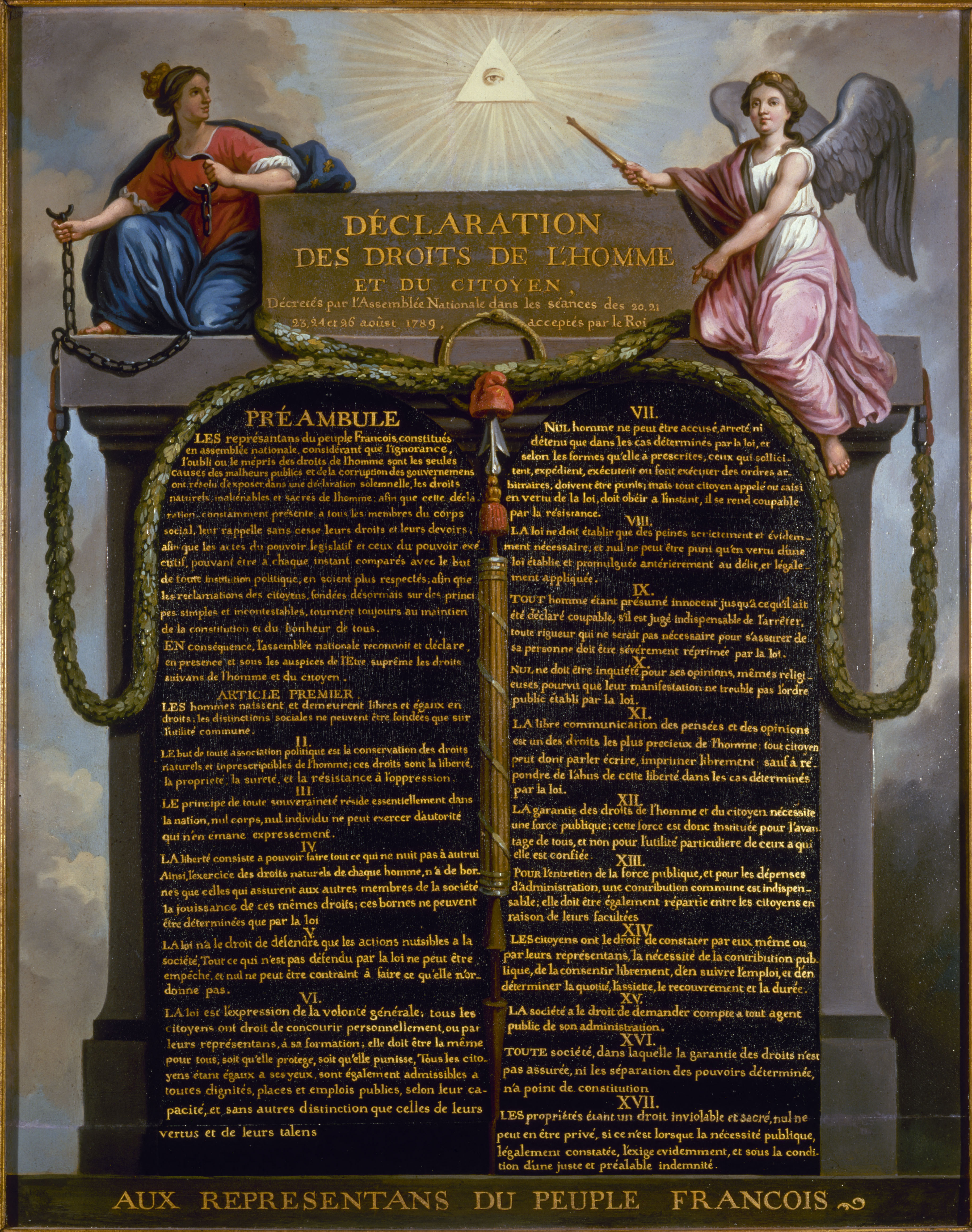
'La France, le pays des droits de l'homme'? Mon cul. The France of today may be all for human rights, but only if you are of white French origin. And don't even think of getting me started on the laughable notion of 'liberté, égalité, fraternité'.
