Thursday, 23 May 2013

France - suicide as a means of ideological and political terrorism

Notre-Dame de Paris Cathedral
It was with horror that I read the news of the suicide of Dominique Venner, 78, an extreme right-wing historian, former OAS nationalist terrorist and virulent opponent of France's new law giving homosexuals the right to marry. He walked into Notre-Dame Cathedral in Paris in the middle of the afternoon, placed himself before the altar, and blew his brains out with a handgun. Vanner had sent an open letter to the website of extreme right party Nouvelles de France just before killing himself.

In the letter he explained the reasons for his action. "I killed myself in order to awaken sleeping consciences" he said, and in a clear reference to immigrants he said he was protesting against "the replacement of our population". He also left a post on his blog in which he denounced the gay marriage law and predicted that "a France which falls under the power of Islamism is a probability".

I wrote above that I was horrified by this news, but perhaps I should explain why. That a right-wing bigot, homophobe and racist should commit suicide doesn't bother me in the slightest. But what does horrify me is that his death is part of a wider and deeply worrying phenomenon in France - that of using suicide as a form of terrorism to promote ideological and political views and opinions.

That this should occur in France is not exactly a surprise, given the country's obsession with suicide and abnormally high suicide rates. There have been several particularly gruesome suicides by teachers over the last couple of years, including several instances in which the victims poured petrol over themselves in front of children, set themselves alight and burned to death. Needless to say they often leave notes which protest against their working conditions, and trades unions man the barricades to loudly denounce government policies they say lead to these events.

There has also been a long string of suicides at France Telecom over the last few years, and each one is exploited by the unions to denounce what they call inhuman management practices and punishing work schedules.

Then there are those who set themselves alight inside or outside unemployment offices or other government agency premises to protest against everything from their social security payments to housing problems to perceived unfair treatment by staff.

And how do I know all this? I know it because I read the press, which splashes front-page headlines to accompany each one, and every time they do those who comment them and various organisations denounce such-and-such a government policy or such-and-such an injustice.

Political parties also jump on the bandwagon to score cheap political points. The UMP, the Front National and the homophobic Catholique extremist agitator Christine Boutin have all blamed the government for Vanner's suicide. 

This is grotesque manipulation, both physical and intellectual terrorism and it must be resisted. Two things need to happen here.

The first is to say that 'enough is enough' and insist that the press, which whips up virulence and conflict (and much-needed advertising revenue) each time someone kills themselves in a spectacular manner for ideological and other reasons, stops publishing high-profile and sensationalist gutter-press articles on this phenomenon. After all, if these suicides were given less prominence some of those who may be tempted to kill themselves may be dissuaded from doing so in the knowledge that their act would be largely ignored.

And the second thing to do is for French society to make it very clear that suicide is not an acceptable manner of expression in a civilised and democratic country. Killing oneself to advance a cause is terrorism, it's as simple as that, and it's high time this was made clear by senior French personalities, journalists, bloggers and the public at large.

Wednesday, 22 May 2013

Dealing with the Roma tragedy in France - an insider's story and an impossible dilemma

A Roma camp near Lyon's St Exupery airport, now dismantled (my photo)
The story got very little press attention at the time, but it deserved much more. It concerns a fire which broke out early in the morning of May 13 in the upper floors of a derelict factory in Lyon, where I live. The fire - the second fatal incident in the building in just three months - claimed the lives of two Roma women and a child. The previous accident had killed a Roma man who was trying to remove a small wooden beam from the roof in order to build a fire and heat the building when the roof collapsed upon him.

These victims and many other Roma had been squatting in the building for several months as a direct result of the French government's policy of destroying Roma camps, thus forcing them to move on and take refuge in whatever shelter they can find. Many of them are forcibly sent back to their countries of origin in charter flights which take off regularly from the airport, and the EU has expressed its strong disapproval of this policy on several occasions, but to no avail.

So much for the news, but what of the story behind it? What are the feelings of those who are charged with dealing with this grim situation, its consequences, and its human cost?

The stark answer to those questions came yesterday evening in the form of an email from a dear friend who works in the French education system and whose job it is to coordinate action to help, if not the adults, at least their children. What this person wrote made my blood run cold.

"At the very moment when new Roma camps are sprouting up everywhere, like flowers in the spring rain, and at a time when we are totally overwhelmed by the phenomenon whilst Roma families are in a living hell, fighting as they are to keep their heads above water and stay alive, my job is to contact them to ask them to bring their children to school. After all, isn't this an opportunity for them to escape their miserable existence? 

But are these parents, who are now in mourning for their loved ones - a sister, a cousin or a mother - who died in a fire, even aware of how important it is to put their young (3-6-year olds) in school? Then again, what possible significance could the concepts of 'scholastic assiduity' and 'socialisation' hold for them, seeing as they spend all their time dealing with life, death, being hunted down, and rejection? These are two worlds, two realities, and they are in conflict. 

I am extremely ill at ease at having to insist on reminding them of French law - to which they are nevertheless subjected - and that we all have to deal with the situation together. But that's my job. [...] In the case of one family, I have to keep 'harassing' them to persuade them to send their oldest child, whose 6th birthday it is today, to school. At 6 years old the law demands that he goes to school and so I had to tell his father that he would be breaking the law if he didn't send him.

I'm only doing all this because I believe that schooling represents an all-too-rare rare opportunity for these children..."

The situation of France's Roma population is dire, the government is treating them like cattle, they are in an impossible position, and things look set to get even worse this summer.

Please spare a thought for the Roma and those who work with them. Thanks.

Monday, 20 May 2013

The Lescure Report, or how taxes pay the exorbitant salaries of actors

Yeah great, but who's paying for it?
The Lescure Report is designed to help the progress of culture in the digital age euuhhh, sorry, is designed to screw even more tax out of the French public in order to pay the fat-cat salaries of has-been actors with alcohol issues. That said, to be fair it also attempts to address the problem of the illegal downloading of films, music and other cultural creation and it contains some interesting ideas.

But a part of this panoply of proposed legislation involves slapping a tax on tablets, smartphones, computers, online TVs and other digital equipment in order to help finance cultural production, particularly the French film industry. Fair enough? Let's see.

François Hollande's proposed 75% tax on high salaries resulted in many rich people leaving the country, the most high-profile of whom was arguably Gérard Depardieu, one of France's most successful - and rich - actors. Be that as it may, the massive media focus on his salary and that of other actors led to accusatory fingers pointing out what everybody know for years - that the public was paying through the nose for an inefficient state-funded film and music industry which milks the public.

So here is a list of the methods the government uses to maintain this system, a system which is one of the reasons why the quality of many French films is so poor these days (but that's another subject);

If you live in France, you pay;

A TV licence, which finances not only TV, but the full-length feature films for cinemas it co-produces.

A tax on 'private copying', which is applied to anything - video and audio cassettes, CD roms, hard drives etc - upon which video, images, music and text may be stored.

Your cinema tickets incorporate a tax which subsidises the film industry as well as the trailers for upcoming films.

A 'Telecom tax', which compensates for the loss of income on national TV stations due to the suppression of adverts in the evening. This money is, in turn, partially invested in financing new films.

Local and national taxes, which are often used to co-produce films.

Unemployment contributions on salary, which go to pay unemployment benefit for unemployed workers in the music, theatre, and film industries. These contributions also help to fund the SOFICA - the state-run company which finances the cinema and audiovisual industries.

And now they are to tax our phones and computers etc to subsidise the same lame-duck industry!

State support for the arts is of course a good thing, but you know what they say about a good thing, you can have too much of it. That is the case here and if the film industry was forced to stand on its own two feet a little, all the dross and garbage and jobs-for-the-boys which characterises the world of an elite clique of actors and directors would be forced to sink or swim a little uniquely on its artistic merit or otherwise. I know it's difficult to get the dosage - the mix - right in this area, but it's high time something was done to change this sclerotic and self-serving ripoff.

Oh, and I nearly forgot, do you know who drew up the Lescure Report? It was Pierre Lescure, an influential French journalist, TV personality and businessman who is also....yup, you guessed first time.....a film actor.

Well well well, quelle surprise..

Sunday, 19 May 2013

The Monaco-France football tax spat mirrors France's dilemma for the future

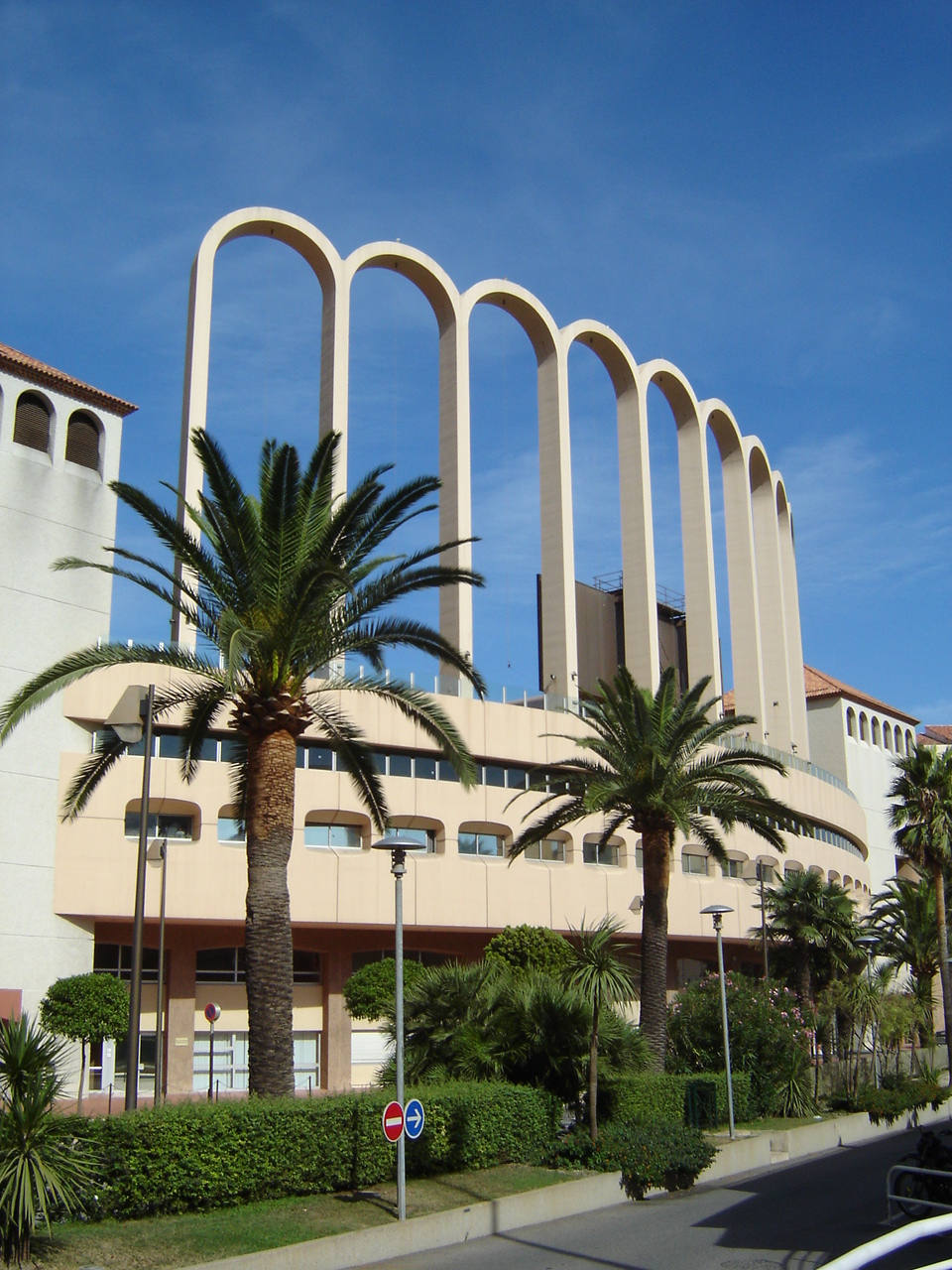
Monaco football club stadium
Sport often mirrors society in general and it is doing so again in the form of AS Monaco football club's tax spat with French football authorities. The club, which has been playing in the French league for almost 100 years, is taking legal action against them in the French State Council because of a long-running battle over the principality's status as a tax haven, which allows them to attract world-class players and management with the offer of tax-free salaries. The decision to do so was taken after other French league clubs threatened to block the club's entry to the country's Premier League next year, and the French Football Association made matters worse by suggesting that Monaco pay €200 million in tax and move their headquarters to France to be able to continue playing in France. That was the straw that broke the camel's back as far as Monaco were concerned.

Monaco says that these moves breach European law and that they break a 50-year-old tax convention between France and Monaco, and the French say that the current status quo gives Monaco an unfair advantage.

There are grounds for these French fears of course. The French government under François Hollande has slapped substantial taxes on club profits and players' salaries, and this is sure to lead to an exodus of some of the league's better players to more generous clubs in countries such as Britain, Spain, Germany and Italy. Monaco does not have these problems however, because the club is now overseen by Dmitry Rybolovlev, a Russian billionaire who has big spending ambitions and has recently shown an interest in a long list of top players and managers in other countries.

The result of this is that AS Monaco is one of just two clubs in France with major buying power and big European ambitions, the other being Qatari-backed Paris Saint-Germain, the club which managed to lure David Beckham to finish his career with them. PSG unsurprisingly won the French championship with the help of several major signings, and the fear of all the other cash-strapped clubs is that French football shall be no more than a two-horse race next season.

That's how things stand, so be it, but all this begs a much wider question, that of how Hollande and his government can possibly reconcile their current economic policies with success in a country where 'business' and 'money' are dirty words. France has taxed business and the rich very hard since Hollande came to power, there have been threats to nationalise companies, and many prominent (and rich) personalities have left the country for tax reasons. The same goes for some companies and for senior highly-paid personnel, who have been relocated abroad. The result is that foreign investors are wary and that business confidence is at an all-time low.

The France-Monaco row has shone a harsh and analogous spotlight of reality on some crucial choices facing France. If French industry and foreign businesses in France are to invest in order to grow and succeed in international markets they need to be given the chance to do so instead of being trussed up in a fiscal straightjacket, and the same goes for its football clubs, which are of a lower standard than their European counterparts. If they are to be successful and attract investment and the public they too need more help, not hindrance.

This episode shows that if France and its people, like its football clubs, want to remain competitive and be successful, the country will have to change its way of doing things. The alternative, of course, is to accept the country's decline.

Ultimately, France and French football will be forced to choose, because the country can't continue to have its cake and eat it. Either France wants to succeed in a world which is much bigger than it is and which imposes its rules, or it doesn't.

In which case it shall be obliged to resign itself to ever-increasing mediocrity both on, and off, the football pitch.

Saturday, 18 May 2013

Floss and Cahuzac: why do people vote for corrupt politicians?

Gaston Flosse
I read this morning that Gaston Flosse has been elected as president of French Polynesia for the umpteenth time. Who is Gaston Flosse? He is a right-of-centre politician with a long track record of convictions for a slew of offences, including complicity to run an illegal gambling organisation, illegal conflict of business and political interests, embezzlement, obstruction of a magistrate in the execution of his duties, and destruction of material evidence in a criminal investigation. You name it, he has done it. Oh, and he is also suspected of being involved in the murder of a journalist who, it is alleged, had evidence linking him to Clearstream, a not-so-clear bank with a reputation for money-laundering.

Now you may be surprised that voters would place their confidence in such a man, but he is far from being the only example of a corrupt politician being elected or re-elected in France. Here are some more examples....

Patrick Balkany.
Currently a UMP deputy and mayor in the Paris region, his criminal record includes fictitious salaries for non-existent municipal employees and slanderous allegations of corruption. He has physically threatened polical opponents, sexually harrassed female staff and other politicians, been accused of rape and sexual aggression, and threatened one of his lovers with a handgun (she said) in order to force her to commit a fellation upon him.

Harlem Désir.
18 months suspended and a fine of 30,000 francs for misuse of corporate assets and paying himself a salary of 10,500 francs for a fictitious job. He is the current chairman of the French Socialist Party and a European MP.

Jean-François Mancel.
Found guilty in 2000 of illegal conflict of interests and given an 18-month suspended sentence and a fine of 30,000 euros, he is currently a member of parliament.

Jacques Mellick.
No longer active in politics, he was elected as mayor for the town of Béthune after being found guilty of perjury and false witness statement in an affair involving match-fixing in football.

Pierre Bédier.
Re-elected as a General Counselor for the Yvelines region after being convicted of passive corruption and misuse of company assets. He received a sentence of 18 months suspended and a fine of 50,000 euros.

Henri Emmanuelli.
A former Socialist Party State Secretary, he is currently a General Council president. Convicted in 1997 for influence peddling, he was handed down an 18-month suspended sentence and a two-year suspension of his civic rights.

Alain Juppé.
Mayor of Bordeaux since 2006. Illegal campaign financing and fictitious jobs which led him to be convicted in 2004 of conflict of interest, embezzlement and breach of trust. 18 months suspended and ten years of ineligibility to stand for an electoral mandate. Reduced on appeal to 14 months suspended and one year of ineligibility.

These are but a few of the many corrupt politicians who get re-elected, so it's not surprising that yet another man with a shady background is trying to do the same thing today. He is Jérôme Cahuzac, a former budget minister in charge of tax collection who was recently charged with having a money laundering bank account in Switzerland and subsequently chucked out of office for lying about it in parliament.

It's a curious phenomenon that I just don't understand, and I'm not the only one, seeing as ne'er a month goes by without some journalist or psychologist or someone musing in the press about the reasons for it. Some say it's because giving these people a second chance makes them feel better about their own skeletons in their own cupboards, and others put it down to 'supporting the underdog', which French people like to say they do. As for me, my jury's still out on the question.

So, would you vote for a politician who has been found guilty of corruption? Does this happen in your own country to any great degree?

Thursday, 16 May 2013

And my English is poor....
French Higher Education and Research Minister Geneviève Fioraso has proposed a bill which endorses and permits the teaching of English in certain subjects in French universities, but as was to be expected there has been an outcry against it by politicians from all the major political parties. They claim that it would result in the death of French across the world and the hedgemony of English. But it wouldn't, and here's why in QA form.

'This is a scandalous proposal!' say opponents.

No it isn't, it is nothing new moreover because it does no more than formalise what has been going on in French higher education for years, where almost 800 courses have been given in foreign languages (90% English) for 20 years, despite the Toubon Law which theoretically forbids it apart from a few very rare exceptions. It's a hypocritical ostrich-head-sand situation which needs to change.

Yes, but why have any subjects in anything but French in a French university except a language-related cursus?

Because the real world imposes it. The vast majority of research and development in Europe and the world in the medical and pharmaceutical environment, science and technology, physics, chemistry and mathematics as well as information technology and future technologies such as nanotechnology is in English. Also, you can't do business with the Anglophone world unless you know Anglo-Saxon law systems. You don't like it? Change planets then. Or, of course, only do business with African dictatorships, like you used to in the past. (Oops, a bit below the belt that, sorry.)

Some politicians and philosophers fear that France is "losing its influence" and are worried about "a loss of technical expertise in a certain number of areas" and that this may lead to the disparition of French.

Indeed, and that's precisely why it's time to use English. France should not be doing a King Canute here, it should be waking up and smelling the coffee. There is nothing incompatible whatsoever about 'international France' increasing its expertise - and god knows it needs to - in order to become more competitive in a globalised world and 'homeland France' continuing to insist on the use of French in France. Nor would this law affect 'Francophonie', the curious and imperialist-tinged French custom of proselytising French abroad (whilst resisting English at home!)

'Foreign students who come to France should follow their cursus in French.'

Foreign students bring much-needed revenue to cash-strapped French educational institutions and the vast majority of them already speak English whereas they they do not speak good French. Some of the best students in the world come from countries in which English is systematically taught. They come here to increase their knowledge and increase their chances of employment, and knowing their subject in English is an essential part of that. Besides, surely they will go home praising France if they get an adequate and pertinent education here? French only? If you did that you'd have no foreign students left, simple as that.

'The Académie Française objects.'

So what?

------------------

Sheesshhh, I mean, it's hardly rocket science now is it!

Tuesday, 14 May 2013

Swallows and Spitfires....

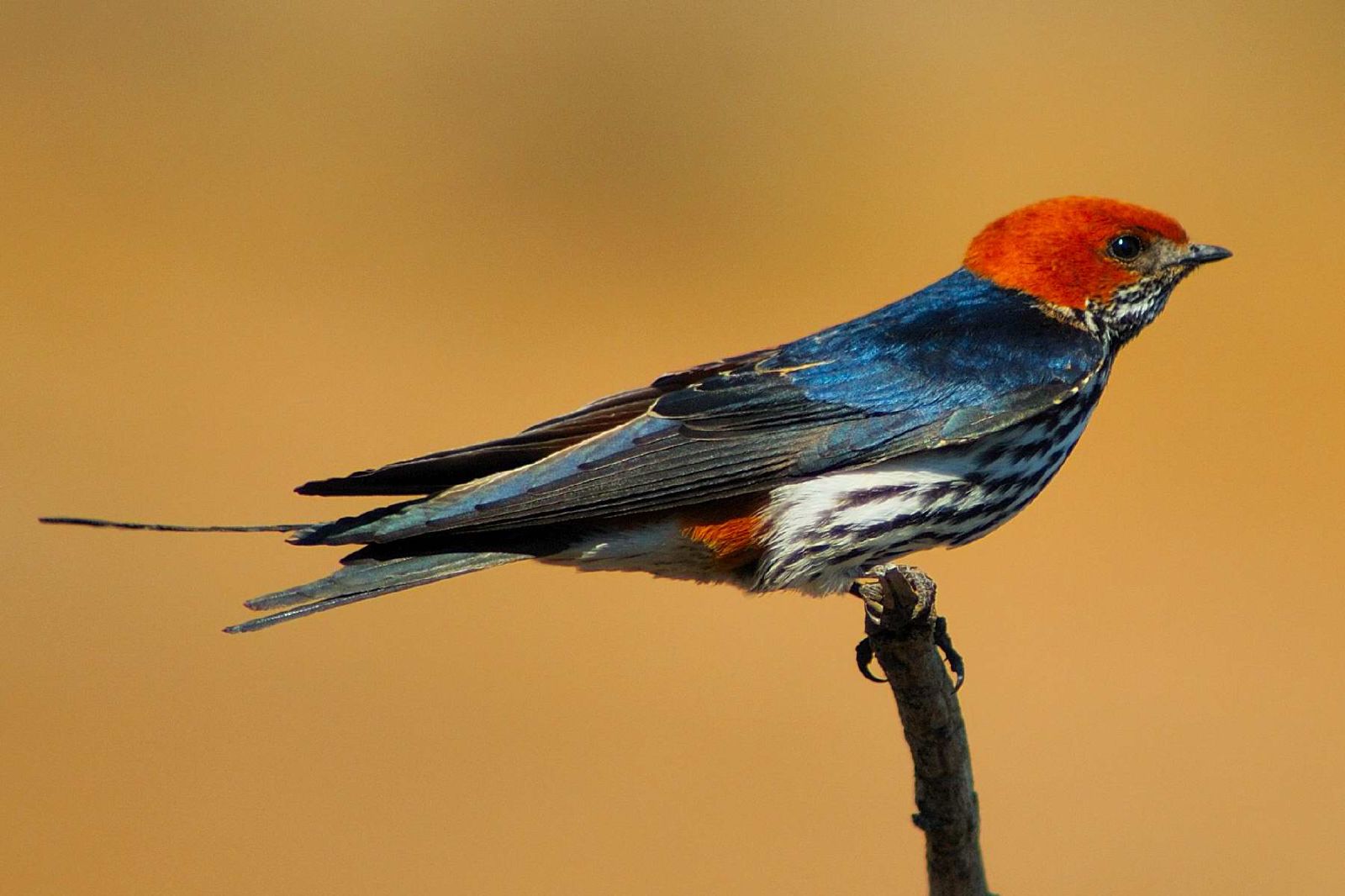
It's going to rain tomorrow. I know this because the swallows told me. There I was, drinking a beer on the terrace of a music café, and then they zoomed into view. Three of them.

Swallows are excellent flyers who change speed and direction at almost vertiginous speeds, particularly when they sense rain coming. They are beautiful to watch, so graceful, elegant, playful and delicate. They are my favourite birds.

Anyway, in they came like Spitfires fighting Stukas. Banking and rolling to escape each other, turning on a wingtip and accelerating, ducking and diving, slowing down to be overtaken, spiralling down towards the ground at breakneck speed, shooting up vertically like rockets. A real dogfight.

Except that, unlike warplanes, swallows don't try to shoot each other down. They just love their freedom and like to have fun. No cannons, no bullets, just the joy of living....