Showing posts with label economy. Show all posts

Sunday, 19 May 2013

The Monaco-France football tax spat mirrors France's dilemma for the future

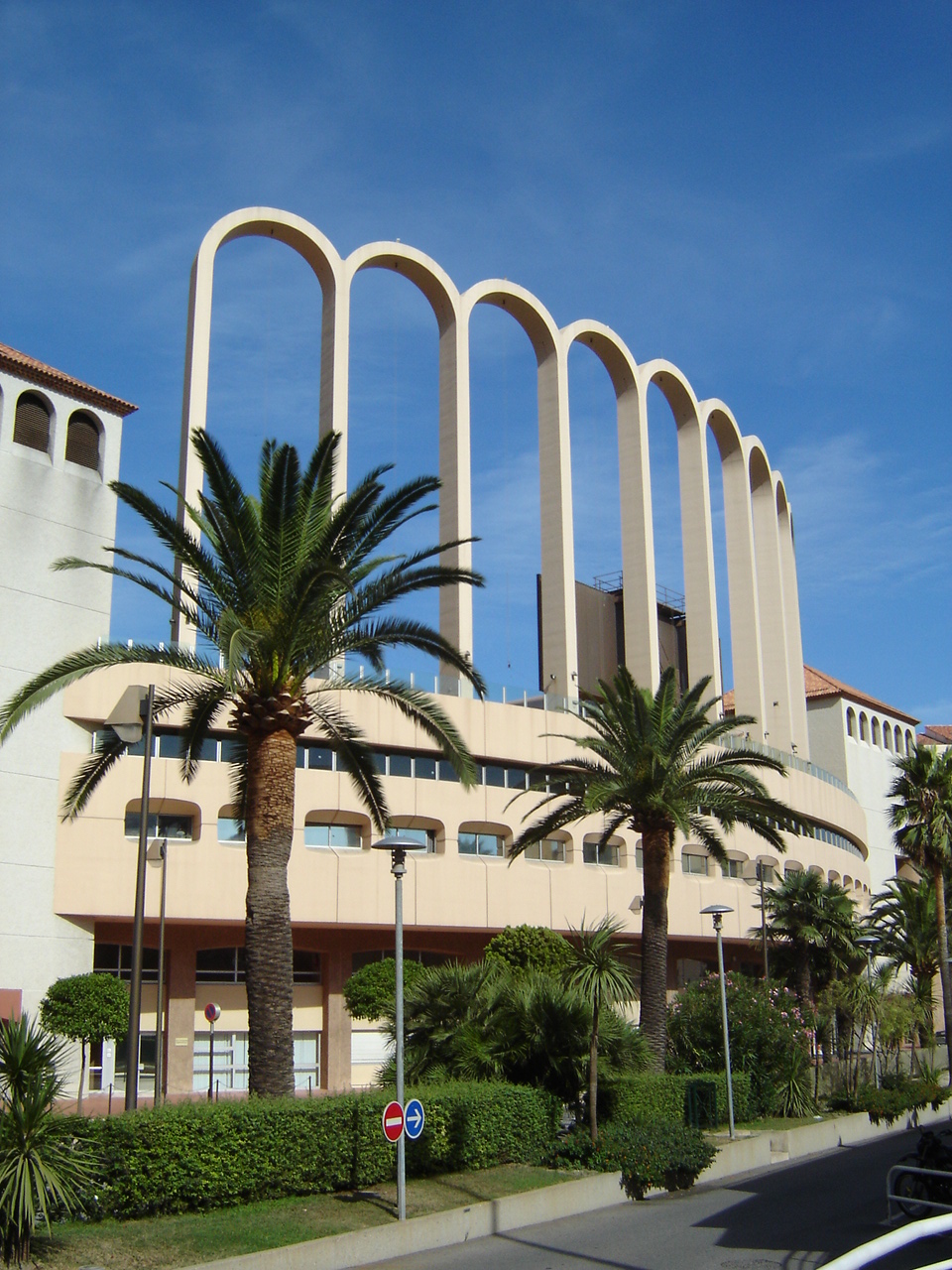
Monaco football club stadium
Sport often mirrors society in general and it is doing so again in the form of AS Monaco football club's tax spat with French football authorities. The club, which has been playing in the French league for almost 100 years, is taking legal action against them in the French State Council because of a long-running battle over the principality's status as a tax haven, which allows them to attract world-class players and management with the offer of tax-free salaries. The decision to do so was taken after other French league clubs threatened to block the club's entry to the country's Premier League next year, and the French Football Association made matters worse by suggesting that Monaco pay €200 million in tax and move their headquarters to France to be able to continue playing in France. That was the straw that broke the camel's back as far as Monaco were concerned.

Monaco says that these moves breach European law and that they break a 50-year-old tax convention between France and Monaco, and the French say that the current status quo gives Monaco an unfair advantage.

There are grounds for these French fears of course. The French government under François Hollande has slapped substantial taxes on club profits and players' salaries, and this is sure to lead to an exodus of some of the league's better players to more generous clubs in countries such as Britain, Spain, Germany and Italy. Monaco does not have these problems however, because the club is now overseen by Dmitry Rybolovlev, a Russian billionaire who has big spending ambitions and has recently shown an interest in a long list of top players and managers in other countries.

The result of this is that AS Monaco is one of just two clubs in France with major buying power and big European ambitions, the other being Qatari-backed Paris Saint-Germain, the club which managed to lure David Beckham to finish his career with them. PSG unsurprisingly won the French championship with the help of several major signings, and the fear of all the other cash-strapped clubs is that French football shall be no more than a two-horse race next season.

That's how things stand, so be it, but all this begs a much wider question, that of how Hollande and his government can possibly reconcile their current economic policies with success in a country where 'business' and 'money' are dirty words. France has taxed business and the rich very hard since Hollande came to power, there have been threats to nationalise companies, and many prominent (and rich) personalities have left the country for tax reasons. The same goes for some companies and for senior highly-paid personnel, who have been relocated abroad. The result is that foreign investors are wary and that business confidence is at an all-time low.

The France-Monaco row has shone a harsh and analogous spotlight of reality on some crucial choices facing France. If French industry and foreign businesses in France are to invest in order to grow and succeed in international markets they need to be given the chance to do so instead of being trussed up in a fiscal straightjacket, and the same goes for its football clubs, which are of a lower standard than their European counterparts. If they are to be successful and attract investment and the public they too need more help, not hindrance.

This episode shows that if France and its people, like its football clubs, want to remain competitive and be successful, the country will have to change its way of doing things. The alternative, of course, is to accept the country's decline.

Ultimately, France and French football will be forced to choose, because the country can't continue to have its cake and eat it. Either France wants to succeed in a world which is much bigger than it is and which imposes its rules, or it doesn't.

In which case it shall be obliged to resign itself to ever-increasing mediocrity both on, and off, the football pitch.

Wednesday, 20 February 2013

Gizzajob: *Facepalm*

Here is the news. Major American tyre company (ok, tire for yous Americans:) Titan, which already imports its own tyres into France, wanted to buy the struggling French Goodyear tyre production site. But Titan's Big Boss, Maurice M. Taylor, decided not to do the deal. So he wrote a letter to the French government to explain why.

He said that labour costs were much too high in France, that French workers spent too much time on coffee breaks and lunch, that their unions were suicidally intent on not changing current practices and that if they didn't become more productive and competitive the French tyre market would soon be dominated by Chinese and Indian imports.

The riposte wasn't long in coming. French Minister of Industrial Renewal Arnaud Montebourg wrote back to say that well, if that's how you feel, what we're going to do is to check your tyre imports with "redoubled zeal" to make sure they respect production and safety requirements and if they don't we'll refuse them.

In other words, a businessman tells a country its workers are shit, in response to which its government says that it's going to penalise the businessman's company.

That's it. The news.

Two ideologists waving their 'mine's bigger than yours' cocks around and confronting each other in a grotesque and strutting dance of combat at the very moment the world economy and its movers and shakers need not less, but more reconciliation and compromise in order to clean the current mess.

And these people get PAID for doing this chrissakes????!!!!

Gizzajob.

*Facepalm*

Wednesday, 23 January 2013

The ongoing fable of the wooing of Germany

Are you sitting comfortably children? Good. Then we'll begin.
-------------

Everybody's favourite girl
Imagine for a moment that countries are like people, and that just like people they may be friends or enemies, work colleagues or strangers, and some are even lovers or married couples. Then ask yourself this; if France, Germany and Great Britiain were people, what would their relationships be like?

People have various strong points and failings, and they are more or less attracted to each other by a combination of many factors such as their natural affinities, characters, views on the world, future prospects, money and influence.

Europe is a club which was formed by group of friends, all shopkeepers, who decided to kiss and make up after they got into a big fight with each other, a fight called World War Two. As wise friends do, they decided to stop the blame game over who started it and help each other in the future. Germany and France were the two friends who were most motivated by the idea, although there were a few hangers-on such as Belgium and Luxembourg. They didn't have any choice anyway, as they were not big enough to stand up to the big two's hectoring tactics.

Then, one day, in walked Britain. "Hey" he said, "I was in the fight too, so can I join?" But Germany and France, fearing that Britain would want to dominate and steal all the sweets, said no, so Britain stood outside, sulked, and kept asking to join for years. France in particular was against the idea because he had strong suspicions that Britain would try to woo Germany away from his best friend.

Germany and France finally decided to relent however, particularly as Britain was quite a large man with a lot of big friends, including the USA, who was the biggest guy on the block. So that's why Britain was allowed to join, although they weren't allowed into club meetings which decide things, which really meant that Germany and France decided things on their own and the rest usually followed suit, although there was a fair bit of arm-twisting and ear-tweaking doled out to recalcitrants.

Later on the big two fell in love and decided to announce their engagement, which they called their 'special relationship'. France was particularly proud of this because it was well known that Germany was the most sought-after girl in Europe. Germany was rather more discreet about it however because she didn't want to offend anyone. At the same time their circle of friends got bigger, their new friends joined the club - now called the 'EU' - and they decided to buy from each other's shops as much as possible. This plan worked well, and as is only normal, the fiancés bought more from each other than they did from anyone else.

Both the club and the couple had spats from time to time, as all people do, and the biggest spat began three years ago when Greece, Ireland and Spain got into trouble with the others for spending too much of the subscription money. They were told to pay it back or leave and are doing their best to do so and atone for their profligate behaviour.

It is now exactly 50 years since Germany and France announced their engagement and over the years it has almost seemed at times as if they were married. They were very close to each other and agreed on nearly everything. But things were not as they seemed, as is often the case with couples, and they began bickering seriously about six months ago, with Germany saying that France should go out and work more and spend less to reduce his large overdraft at the bank and that if he didn't mend his ways he'd end up like the Greeks "and we don't want that now do we!?" France was annoyed at this rebuke because he knew that Britain agreed with Germany and would try and exploit the situation.

And talking of Britain, what had he been up to all this time? Was he still sulking? Well, he was, but he had also hatched a dastardly plot to win back Germany's favours. Although not a full member of the club - he didn't even use the same Monopoly money as everyone else - he had placed his agents in all its committees and they ended up running its essential functions such as how to fight noisy neighbours like Serbia. He couldn't do it on his own however but he asked his own 'special friend', big boy USA, to help him and the club. Britain was becoming so influential that he had even been heard saying to a friend in the pub that 'I don't want to be a member of Europe, I want to run it.'

He then used strong-arm tactics to get things done his way and he recently threatened to leave the club altogether if he didn't.

And it was under this cloud that Germany and France put on as brave a face as they could yesterday and celebrated their 50th anniversary. It was a good party, but everyone knew that the old sparkle and fire of love had gone.

But very bad news was about to come for France, and come it did just after yesterday's party had ended when everybody found out that Germany had been, if not unfaithful to France, rather devious. Instead of helping France by buying even more from his shop he began to buy enormous quantities of sweets at Britain's shop instead. Worse, Britain had reciprocated and we now know that they have exchanged so much that Britain has replaced France as Germany's biggest trade partner!

Yes children, Germany has come clean and said that she and Britain bought a record 153 billion euros worth of goodies from each other in the first nine months of last year, that their exchanges are booming at double-digit rates and that their trade relationship is the fastest growing in the world. France was shocked to learn that he was no longer Germany's preferred shop. Not only that, Germany seems to have been spending less within the club in general. She used to buy 46% of her needs from the club in 1999, but that percentage has gone down to just 37% today because she has begun flirting with not only Britain, but young and ambitious Asia too.

France is now very angry indeed and, in an attempt to reduce Britain's increasing influence over Germany, said early today that if Britain wanted to leave Europe then he wasn't going to stop him and would even roll a red carpet out for him to leave on.

But that tactic backfired just a couple of hours later when Germany, a strong-willed woman, got annoyed when she heard about her partner's petulance and said that unlike France she wants to talk to Britain in order to smooth out all the problems, find a compromise and persuade him to stay because he is strong, and as such is a useful guy to have around.

Nobody knows how the story ends, because the end hasn't been written yet, but the last news was that France is fuming, Britain is as pleased as punch, and Germany is as pissed off as can be at her two childish and unruly suitors.
----------------------

So I hope you enjoyed that story children, and the moral is twofold - you can never really trust your friends, and Europe is a shambles because it bickers even more than you do in class or in the playground. But at least you have the excuse of being children, whereas adults have none whatsoever.....
Saturday, 22 December 2012

Never mind the rich, France is forcing its young and poorer talent into fiscal exile too

Get Out!
The French government's reaction to Gérard Depardieu's self-imposed fiscal exile to Belgium has revealed what many commentators have been saying for some years now - France is a country which doesn't like itself any more.

That a Prime minister and members of his government can violently criticise a rich man who quite rightly - and legally - seeks to save himself from a vindictive witch-hunt against the country's rich in the form of what amounts to mafia-style racketeering is bad enough, but that he does so by trying to stir up populist and socially-divisive sentiment by saying that they are 'shabby' is almost criminal.

The government is hiding behind a fig-leaf of 'economic patriotism' which laughably assumes that people should love the country more than their own well-being, but nobody in his right mind sincerely believes that, nobody ever paid taxes for patriotic reasons, and the bald fact is that this administration has gone further than any other to stigmatise those who succeed in life.

To his credit, François Hollande has now recognised that this tactic has backfired badly and he is desperately back-pedalling in an effort to counter the negative message France is sending not only to its own talented entrepreneurs but also - and more damagingly - to foreign investment. But the damage has already been done and a lot of France's richer citizens are leaving the country.

Most French governments of the last 40 years have adopted divisive tactics to resolve economic problems. Immigrants have suffered systematic official and unofficial discrimination and no real effort has been made to integrate them, old people with low income have been neglected and forgotten, the principles of equality and freedom were ditched years ago and now it's the turn of the rich to become the scapegoats.

Scapegoats is what French govenments do best to avoid taking the heat. French politics was hijacked a long time ago by a gerontocratic elite which has shut down all meaningful debate, concentrated all the power in Paris and confiscated official figures on sensitive subjects, and turned French politics into an antidemocratic farce, as Fillon and Copé have just shown. Governments have piled up debt to buy off the voters with no visible results and France's exceptionally high unemployment rates have persisted for years because they are an inbuilt feature of an economy which refuses to become competitive an a fast-changing world.

The result is a country which has no faith in its leaders and no faith in the future. Pessimism and blaming others have become national sports, jealousy reigns, and no country in the world takes so many antidepressive drugs in a vain effort to combat its doom-and-gloom outlook.

Of all the losers in this sorry mess however, none have lost more than those who constitute the country's most vital resource - its young people. Unemployment for 18-25-year-olds is in excess of 25% with lower rates in affluent 'white' areas and rates as high as 60% in some immigrant areas, and the current generation shall be the first since World War Two to have lower living standards than their parents did.

It's not surprising then that young people are leaving France in ever-increasing numbers, and, like their rich elders, they are moving to Britain and other Anglophone countries, Belgium, the Far East and anywhere else where they may earn a decent living.

And the backlash is picking up speed. In a scathing attack on their own country and its unwillingness to create real jobs, members of 'Barrez-vous' ('get out!'), an association which offers advice for young people who want to leave France published an article in Libération with the headline 'Young people of France, your salvation is elsewhere: Get Out!' which began with the words "Young people of France, this is not an incitation to fiscal evasion, but to evasion pure and simple."

Other, similar, websites are springing up all the time, and the press is publishing more and more articles written by young people who have found success in other countries. Non-whites often express their relief at being judged on their talent and not on their skin colour, particularly in Britain and the United States, and most agree that they have more options for the future abroad than they did in France.

Britain is a particularly popular destination, to the point where London's French population of 400,000 makes it the 6th-biggest French city in demographic terms (I wrote more about this here.) That explains why so many French politicians go there to press the flesh during elections. Needless to say, having to beg for almost half-a-million votes in a foreign country, and Britain in particular (quelle horreur!) represents a humiliation for France.

I see this phenomenon often in my own life too, and I know a lot of younger people who have either left France or plan to do so. They include my two nieces, one of whom has been depressed since she came back from a year of study in London to complete her studies here. She, like many others in her position, finds France to be an unappealing place with few prospects and she intends to move back to London as soon as possible.

The facts are undeniable but this government, like its predecessors, refuses to recognise them. And, like its predecessors, the only 'jobs' the government are able to 'create' are what they call 'Jobs for the young'. They are nothing of the sort however. They consist of activities like standing on metro platforms to 'help' users get on and off the trains. As if people need help to get on or off a train! They are soul-destroying, a waste of time, and worse still a waste of public money because those who accept them are paid a pittance by taxpayer's money, so not one cent of wealth is being created. That is how the government treats France's young people.

But young people are now voting with their feet in revolt against their humiliation by a government which cannot see that they are, or should be, the country's future.

So, Messrs Hollande, Ayrault and others, having stigmatised the rich for all the country's woes and having called one of them - and by implication all of them - 'shabby' for having left this execrable mess, is your next target to be the young?

After all, they are also leaving the country in ever-increasing numbers so are they too - and just like the rich - 'shabby'?

Thursday, 15 November 2012

French PM Ayrault actually gets annoyed about something!

It's enough to put you off baguettes for life
I nearly fell off my chair when I read his words. Could these really be the words of long-serving Socialist dozy party-line plodder and faithful servant-cum first thus expendable Prime Ministerial scapegoat Jean-Marc Ayrault?

He is talking about an article in The Economist about the French economy when he suddenly and uncharacteristically blasts an all-guns broadside plus missiles for good measure full of vitriolic anger which, could words alone kill an international news magazine, would have vaporised The Economist in an instant and orphaned all its subscribers and readers.

Asked by a German TV station to comment the article he replies "you're talking about a mere newspaper and the excessive exaggeration it uses to sell its paper and I'm telling you that France couldn't care less."

Okay okay, don't hit me I'm wearing glasses! Fair enough, we know where you stand Jean-Marc.

The article he was referring to contains scathing scriticism of the way the French economy is being handled under François Hollande. The headline and standfirst read;
The time-bomb at the heart of Europe
Why France could become the biggest danger to Europe's single currency
It goes on to say in so many words that Hollande and his policies are even worse than catching ebola, that he eats grannies for breakfast, that he has pictures of both Stalin and Hitler on his Elysée office wall and that he would like to see the whole of Europe thrown into economic anarchy and civil insurrection. Well, it nearly does.

Now I'm no expert on economic matters but I have been following Hollande and his government's progress since they came into power.

And that's why I'm telling you, Jean-Marc, that it looks to me like the pressure is getting to you. You and your prez have been urged since you were elected by France, Europe, the World and its dog to do something about the appallingly imbalanced state of your economy instead of merely standing around like gnomes in a garden.

And you may have mistakenly believed that the measures that Hollande announced a few days ago to help businesses to live were enough to take the heat off, at least for a month or two.

But they aren't, and that's why you were rattled by the article. That, and the fact that you, as a former (and deservedly much-appreciated and successful it must be said) mayor of a major French city know full well how to run a budget.

Which means you also know that Hollande and your government are not going to finish U-turning on your election promises anytime soon. For the sake of France I sincerely hope that you and Hollande will succeed in getting France out of the hole, however many U-turns it takes.

Bonne chance...